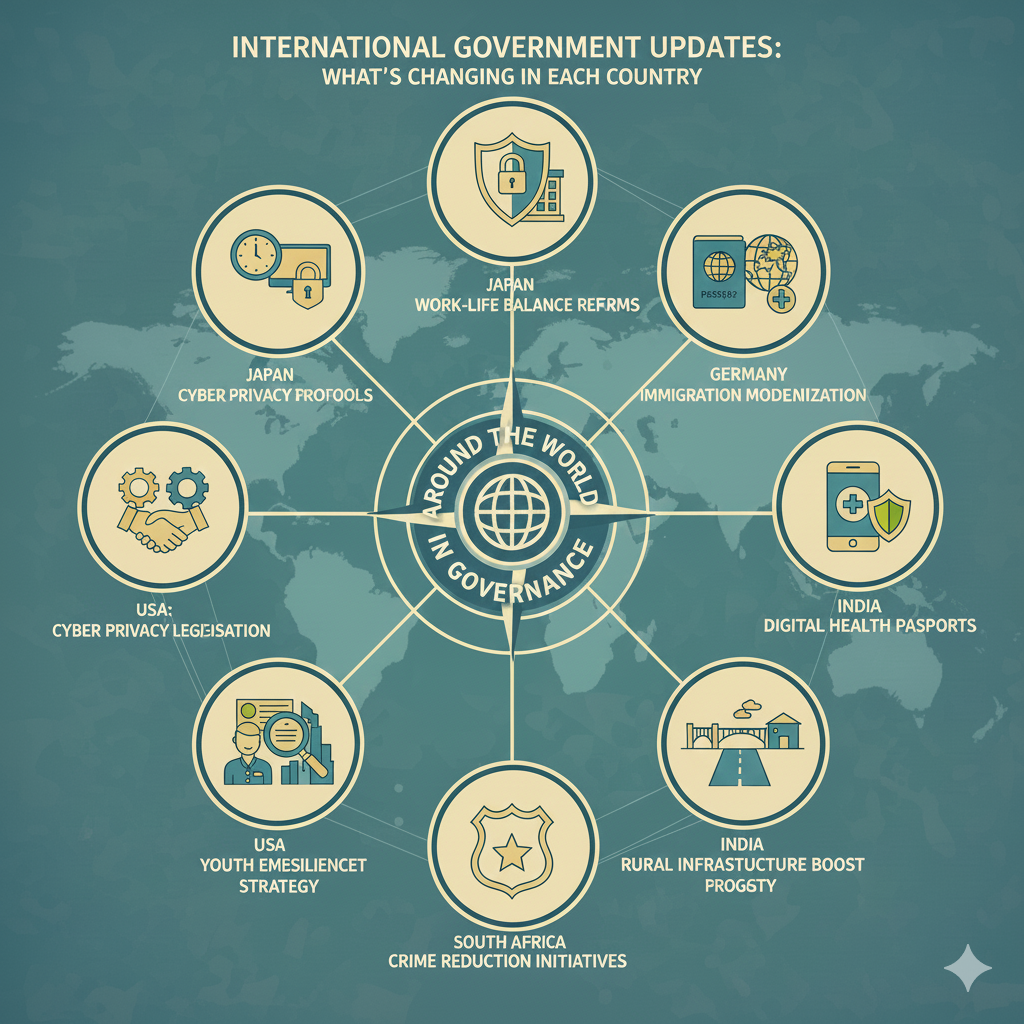
In order to deal with issues like economic instability, security concerns, technological disruption, climate change, and changing public expectations, governments everywhere are having to make crucial decisions. These choices affect regional and global dynamics as well as national growth routes. Monitoring international government updates by nation offers important information about how many countries are addressing common issues while pursuing their unique strategic objectives. Recent government initiatives reflect a fast shifting global policy landscape, ranging from social programs and budgetary changes to international relations and digital governance.
North America: Strategic Policy and Economic Management
Recent North American government policies have placed a strong emphasis on innovation, national security, and economic management. Stabilizing growth, reducing inflation, and bolstering local sectors are the top priorities for policymakers. Support for modern manufacturing, clean energy projects, and infrastructure investment continue to be major priorities.
Regulations pertaining to technology, data security, and competition policy have been updated with the goal of striking a balance between innovation and consumer protection on the governance front. The region’s ongoing influence on world affairs is reflected in foreign policy decisions that prioritize defense cooperation, strategic alliances, and active participation in international organizations.
Europe: Regional Unity, Regulation, and Sustainability
Policies pertaining to economic resilience, environmental sustainability, and energy security are being updated by European countries. National and regional plans are being shaped by climate-related decisions, such as the expansion of renewable energy and emissions regulations. These regulations seek to promote long-term sustainability while lessening reliance on outside energy sources.
Reforms in governance and digital legislation are also significant. European nations are tightening regulations pertaining to artificial intelligence, data privacy, and digital markets. Coordinated choices on trade, migration, and security reinforce political and economic integration, but regional cooperation is still crucial.
East Asia: Economic Strategy and Technological Leadership
East Asian governments continue to emphasize economic growth, industrial policy, and technological advancement. Decisions related to innovation funding, semiconductor development, and digital infrastructure highlight the region’s focus on maintaining global competitiveness.
Security and foreign policy updates also play a significant role. Governments are refining defense strategies and diplomatic engagement to manage regional stability and international competition. Social policies supporting education, workforce development, and demographic challenges reflect long-term planning priorities.
South Asia: Reforms in Development and Governance
Recent decisions made by South Asian governments have focused on modernizing governance, expanding infrastructure, and fostering economic growth. The goal of policies that boost entrepreneurship, financial inclusion, and digital public services is to promote inclusive growth.
Updates on social welfare that cover employment, education, and healthcare are still crucial. Recognizing the value of cross-border involvement for economic and security goals, governments are also deciding to increase regional commerce and cooperation.
Middle East: Modernization of Policy and Diversification
Decisions aimed at institutional reform and economic diversification are being implemented by Middle Eastern countries. Key policy directions include reducing reliance on traditional energy sectors, promoting private sector involvement, and growing the tourist and technology sectors.
Initiatives for digital governance, labor reforms, and public sector modernization are examples of larger attempts to adjust to shifting economic circumstances. Strategic diplomacy, investment alliances, and regional stability are prioritized in foreign policy decisions.
Africa: Development, Consistency, and Regional Collaboration
Governments throughout Africa are deciding on policies to boost regional integration, accelerate growth, and improve governance. The goal of modernizing agriculture, updating industrial policies, and developing infrastructure is to increase employment and production.
Long-term development objectives depend heavily on social policy choices that address social protection, health systems, and educational opportunities. Frameworks for regional cooperation facilitate commerce growth as well as coordinated solutions to security and climate-related issues.
Latin America: Social Policy and Economic Stability
Government updates in Latin America frequently center on social inclusion, fiscal management, and economic stabilization. Taxation, governmental spending, and employment decisions are made with the goal of controlling inflation and fostering sustainable growth.
Education, healthcare access, and social programs that address inequality continue to be top goals. Policy decisions are also being influenced by environmental governance and climate resilience, especially in nations with abundant natural resources.
Technology Decisions and Digital Governance
The emergence of digital governance is a global trend. Decisions on data regulation, digital identity systems, and cybersecurity are being introduced by governments all around the world. These regulations aim to promote digital economies, increase efficiency, and safeguard citizens.
Decisions pertaining to technology are increasingly influencing economic strategy and national security. While creating defenses against cyberattacks and the abuse of digital platforms, governments are investing in innovation.
Environmental, Energy, and Climate Policy
Global government agendas are being shaped by decisions about energy and climate. Policies to increase the use of renewable energy, boost energy efficiency, and lower emissions are being implemented in several nations. International cooperation, employment development, and economic planning are all impacted by these choices.
Additionally, environmental policies emphasize resilience and adaptation, especially in areas that are susceptible to the effects of climate change. Since environmental issues transcend national boundaries, international cooperation is still crucial.
International Patterns in Governmental Decision-Making
Recent government updates show a number of worldwide tendencies, despite regional variations. These include an emphasis on sustainability, digital transformation, strategic autonomy, and economic resilience. In an effort to safeguard domestic interests while maintaining international engagement, governments are reevaluating globalization.
Multilateral cooperation is still crucial. In an interconnected world, decisions pertaining to trade, security, health, and environment emphasize the necessity of group action.
In conclusion
Global government updates show how nations are using a variety of policy choices to address complicated and common issues. Government agendas around the world are being shaped by common themes including economic stability, digital governance, climate action, and strategic cooperation, even while national goals vary. Businesses, legislators, and individuals may better navigate an ever-changing international landscape by knowing the most recent decisions made by each nation. It is more crucial than ever to keep up with international government acts in a world that is changing quickly.