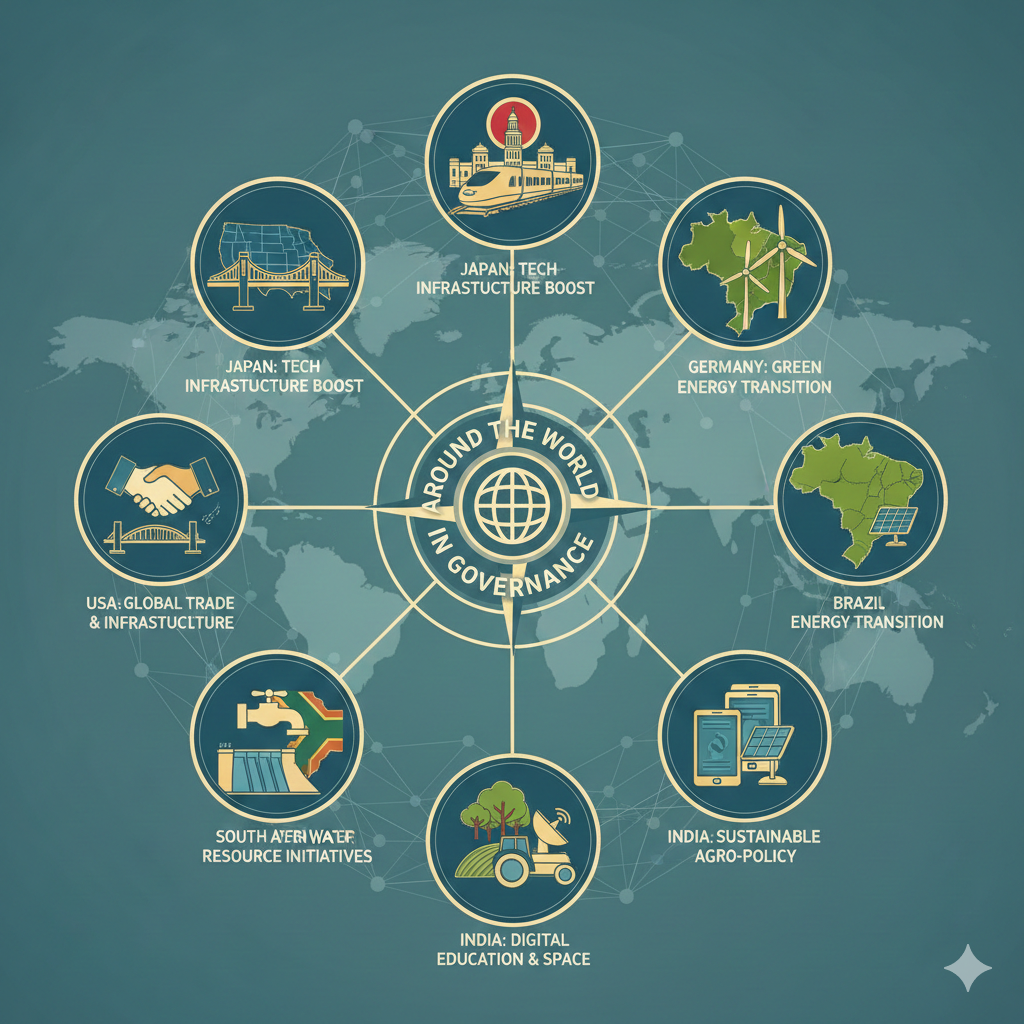
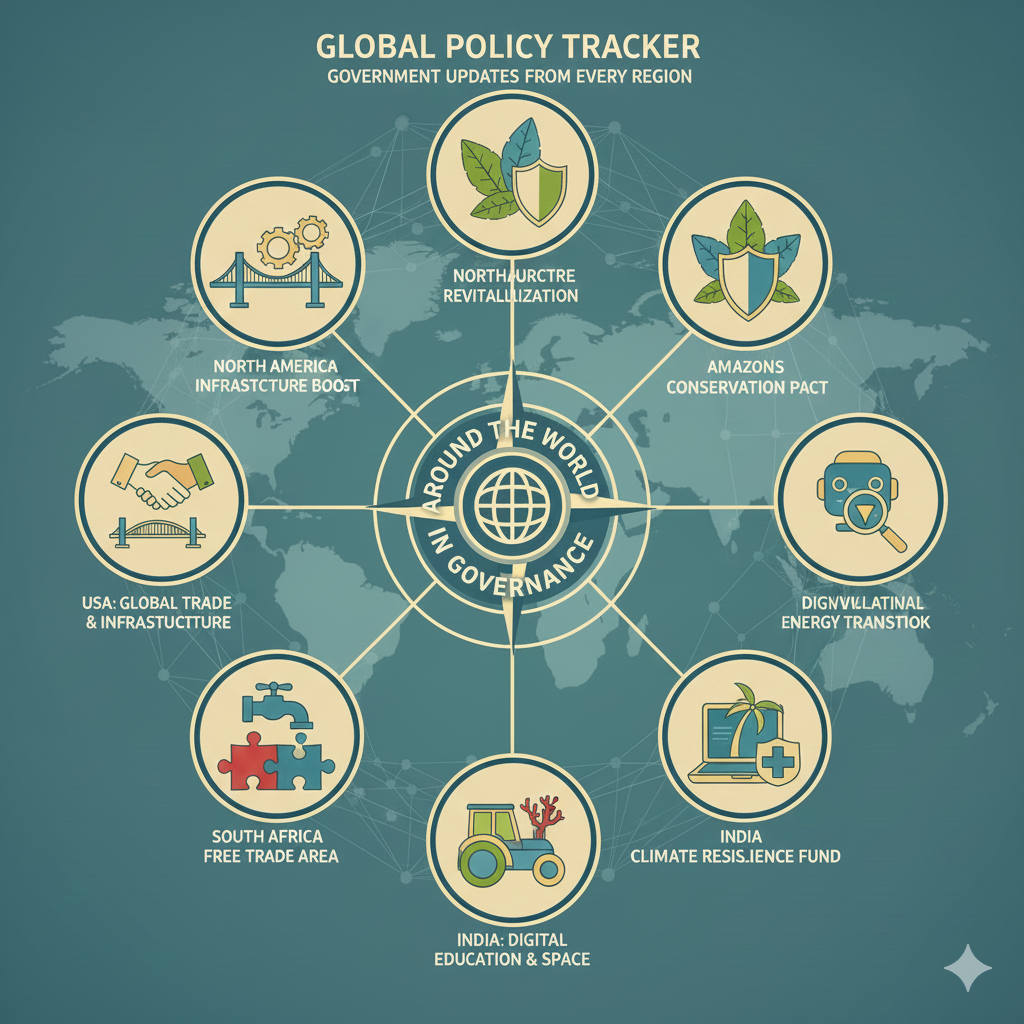
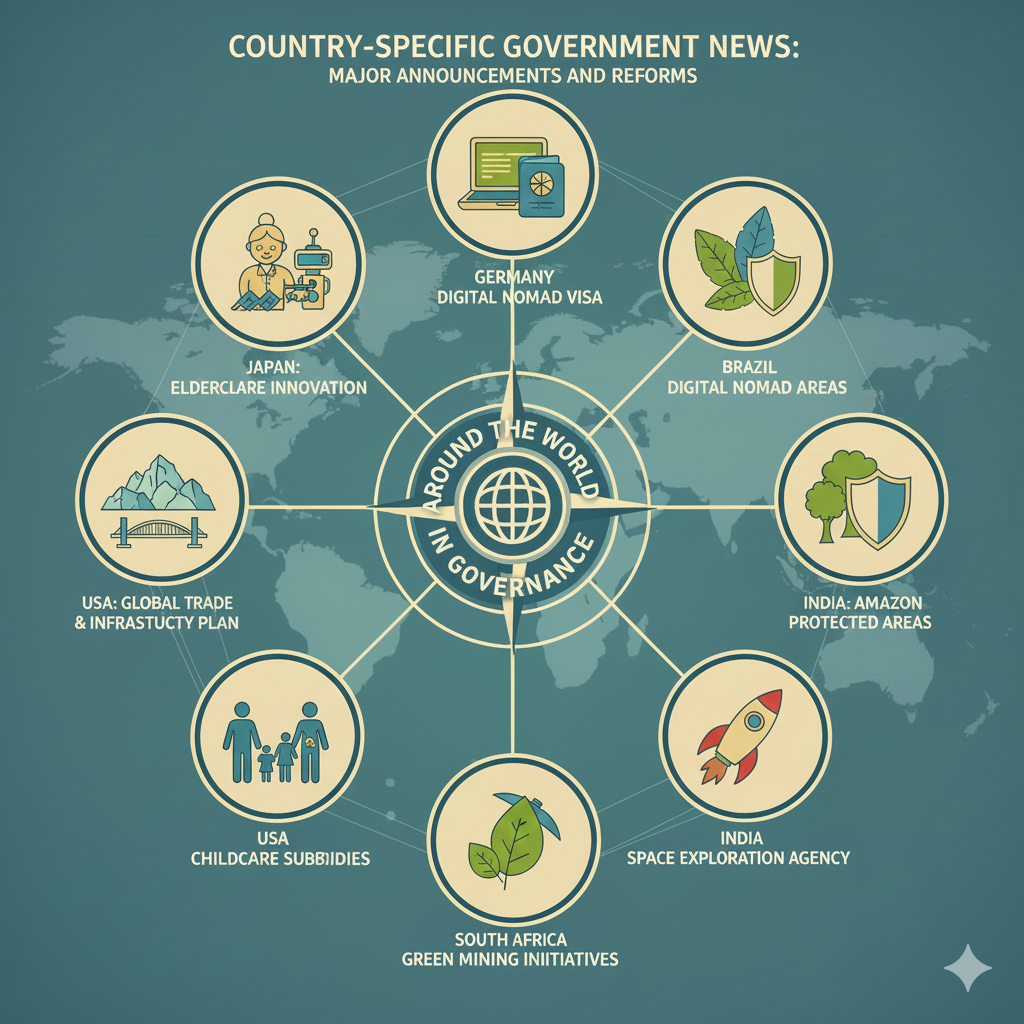
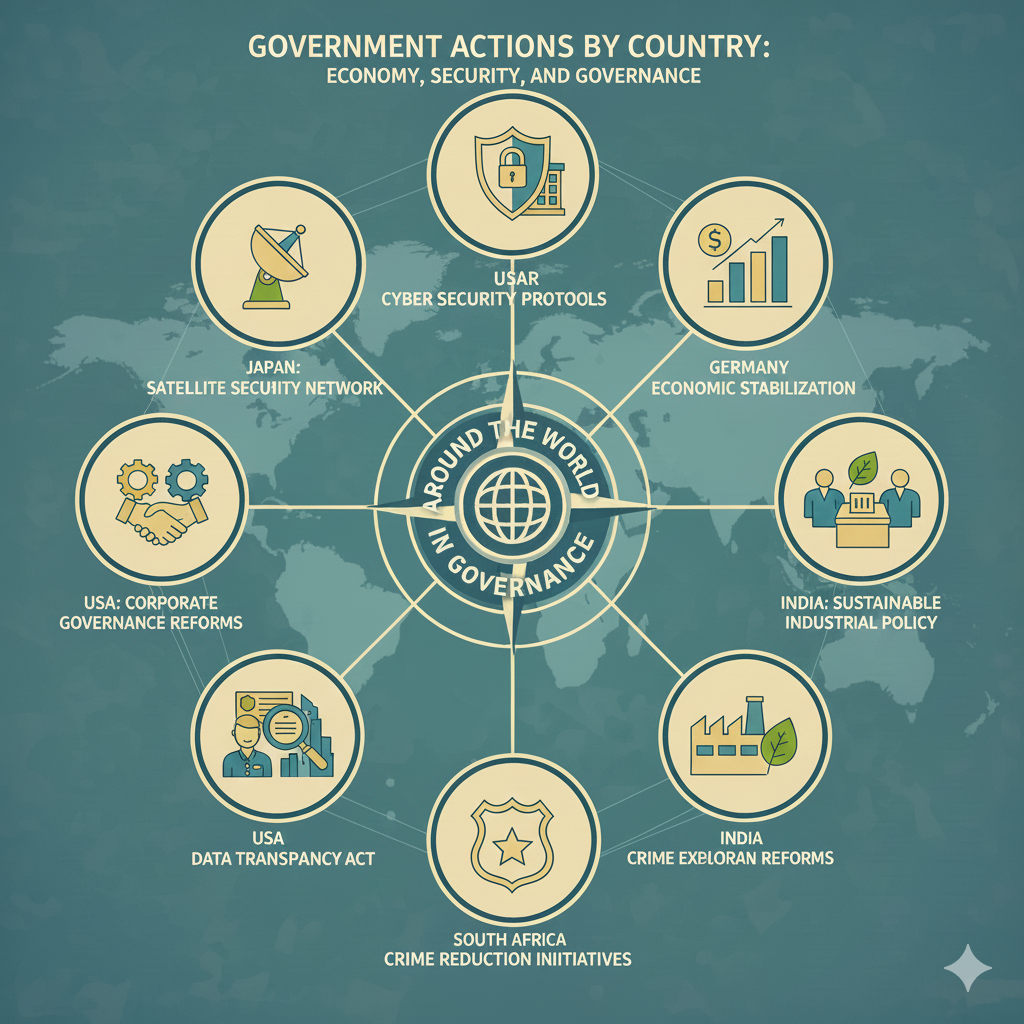
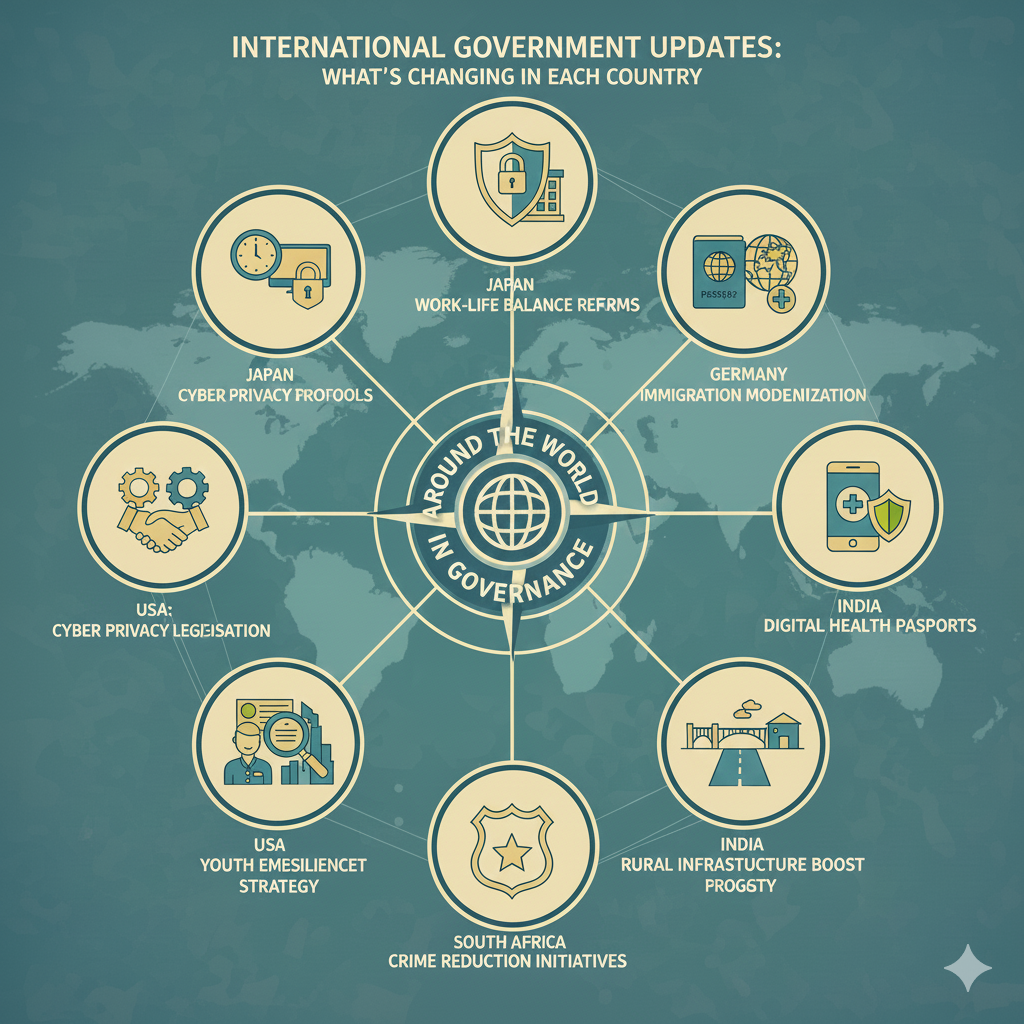
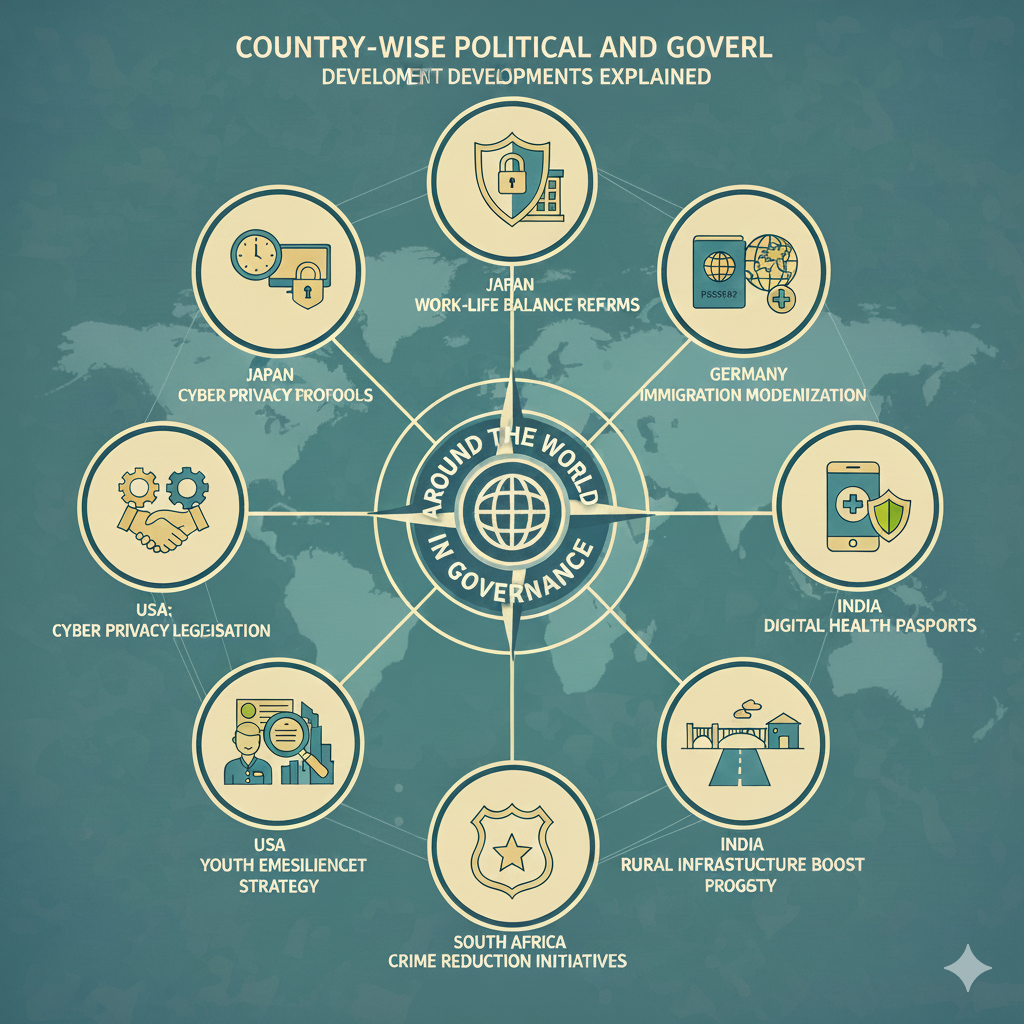
In response to economic uncertainty, social transformation, technological disruption, and geopolitical threats, governments around the world are undergoing substantial changes in legislation, leadership, and policy direction. Global government updates provide a thorough understanding of how countries are modifying public policy and governance frameworks to satisfy changing domestic and global demands. The future of global governance is being shaped by a variety of changes, including strategic policy changes, leadership changes, and legislative improvements.
Updates to the Law and Legal Reforms
Governments continue to play a crucial role in enacting laws, and new legislation reflects shifting societal objectives. To encourage development and safeguard residents, several nations are updating legislation pertaining to corporate operations, worker rights, and economic regulation. Legal reforms that are intended to improve compliance, streamline rules, and fortify institutional structures are becoming more widespread.
Governments are also modernizing their legal frameworks to deal with the digital revolution. To keep up with technological advancements, laws pertaining to data protection, cybersecurity, online platforms, and digital transactions are being added or updated. The goal of these law revisions is to strike a balance between individual rights, security, and innovation.
Changes in Leadership and Political Shifts
The direction and policy of the government are greatly influenced by changes in leadership. Changes in political leadership, whether through internal reorganization, nominations, or elections, frequently result in changes in the priorities of governance. Reform agendas that represent election mandates or strategic objectives for national growth are often introduced by new leaders.
Changes in leadership can have an impact on domestic policy domains like social welfare, economic management, and governance reform. As nations reevaluate international commitments, alliances, and diplomatic ties under changing leadership, they also have an impact on foreign policy.
Changes in Economic Policy
Changes in economic policy are among the most noticeable changes made by governments globally. To control inflation, promote growth, and maintain financial stability, several nations are modifying their monetary and fiscal policies. Efforts to strike a balance between development objectives and fiscal restraint are reflected in budgetary reforms, taxation adjustments, and public expenditure priorities.
Additionally, governments are concentrating on industrial policy, promoting investment, innovation, and domestic production. Updates to trade policy, such as new trade agreements and tariff modifications, are intended to boost economic competitiveness and resilience in a world economy that is becoming more unpredictable.
Changes in Public Welfare and Social Policy
Government activity continues to focus heavily on social policy reforms. Updates from throughout the world indicate a rise in funding for social protection, healthcare, and education. Through focused welfare programs, governments are reducing social inequality, increasing access to public services, and enhancing service quality.
Social policy developments are being influenced by workforce transition, urbanization, and demographic trends. In response to broader social and economic shifts, many governments are modifying their policies to promote gender participation, youth employment, and aging populations.
Institutional Reforms and Governance
For many governments, bolstering governance institutions is a top goal. Reforms targeted at enhancing accountability, openness, and administrative effectiveness are highlighted in recent updates. A key component of these initiatives is the modernization of public administration, judicial reforms, and anti-corruption measures.
The function of digital governance in institutional reform is becoming more and more significant. To improve efficiency and citizen participation, governments are using data-driven decision-making systems, digital public services, and e-governance platforms.
Developments in Foreign Policy and Security
Significant changes in foreign and security policy are also revealed by global government bulletins. In reaction to shifting geopolitical conditions, governments are reevaluating defense plans, diplomatic initiatives, and global alliances. Foreign policy decisions are still influenced by involvement in multilateral organizations, strategic alliances, and regional cooperation.
Non-traditional concerns like cyberthreats, climate-related instability, and global health issues are increasingly being addressed by security strategies. These changes demonstrate how national and worldwide security issues are always changing.
Innovation, Technology, and Digital Policy
Globally, government updates are more focused on technology policy. Regulations pertaining to digital markets, innovation ecosystems, and artificial intelligence are being introduced by nations. To maintain long-term competitiveness, governments are also making investments in digital infrastructure, startup ecosystems, and research and development.
It is still difficult to strike a balance between innovation and regulation. While promoting technological advancement, policymakers must address concerns like data privacy, disinformation, and digital inequality.
Changes in Climate and Environmental Policy
Government objectives are becoming more and more influenced by changes in climate and environmental policies. To cut emissions, support renewable energy, and safeguard natural resources, numerous nations are enacting laws and policies. Public investment, industrial strategy, and energy markets are all impacted by environmental legislation.
Additionally, governments are concentrating on resilience and climate adaptation. The increasing influence of climate change on national planning is shown in policies pertaining to sustainable agriculture, water management, and disaster preparedness.
Coordination of Regional and Global Policy
International coordination is still crucial even in the face of growing national agendas. To address common issues including commerce, health, climate change, and security, governments are participating in regional and international forums. Global government updates show initiatives to improve collective action, exchange best practices, and unify legislation.
Legal frameworks and internal policy improvements are nevertheless influenced by regional alliances and multilateral accords.
In conclusion
A dynamic and changing global governance landscape is revealed by updates from governments around the world regarding legislation, leadership, and policy changes. Governments are undertaking major policy changes, modifying leadership priorities, and revising legal systems in response to difficult circumstances. Even while national settings vary, global public policy is being shaped by common issues like sustainability, digital transformation, economic resilience, and good governance. To comprehend global trends and foresee future political, economic, and social changes, it is imperative to stay up to date on these events.