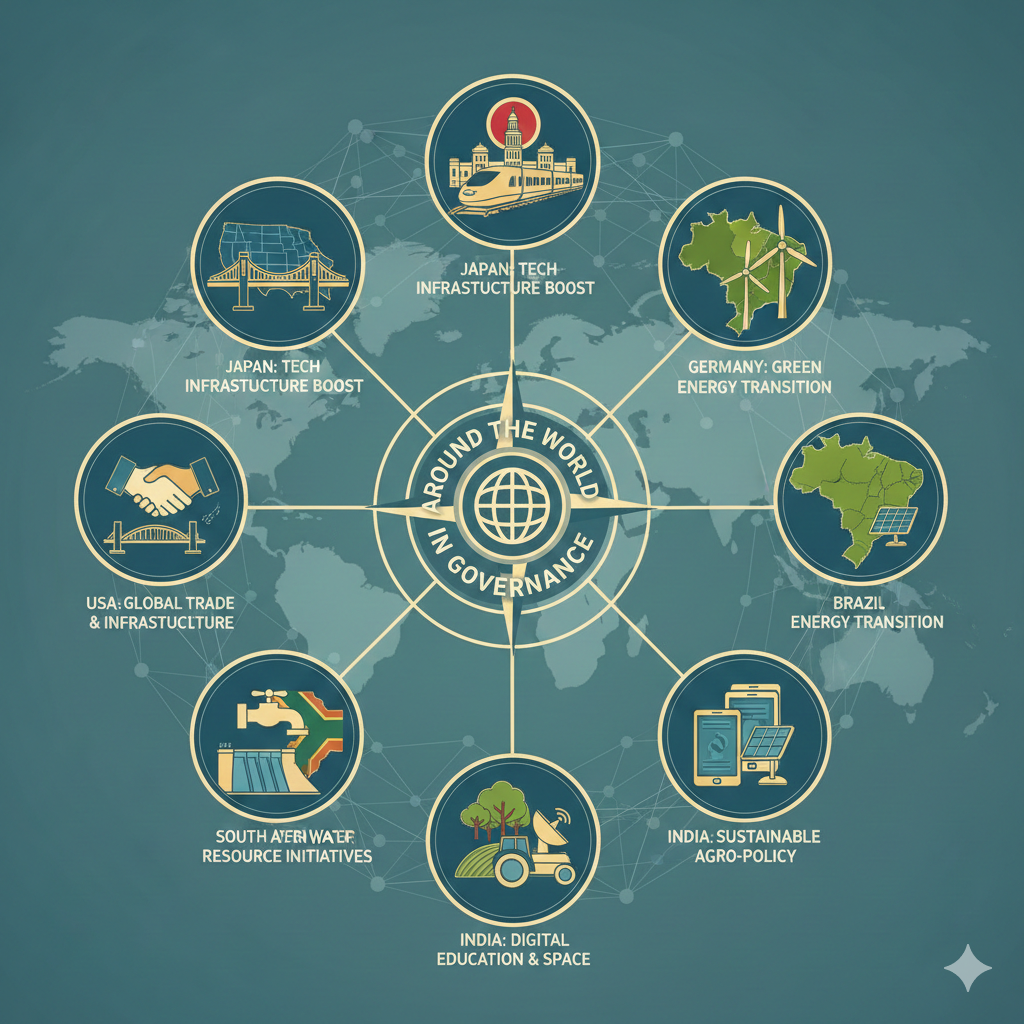
Globally, political and governmental developments have a significant impact on international relations, regional stability, and national agendas. In response to economic constraints, social shifts, technological breakthroughs, and global threats, governments constantly revise policies, implement reforms, and modify leadership tactics. A thorough grasp of how countries are changing in terms of governance, legislation, foreign policy, and socioeconomic management can be obtained by analyzing political and governmental events at the national level.
North America: Developments in the Economy, Society, and Security
Political and governmental developments in North America are centered on maintaining national security, promoting social welfare, and stabilizing economies. To control inflation and encourage growth, governments are enacting monetary and fiscal policies. Important areas of economic policy updates include infrastructure spending, tax reforms, and assistance for domestic industry.
The goals of social policy developments are to enhance social protections, healthcare, and education. E-services and cybersecurity guidelines are examples of digital governance projects that improve citizen involvement and administrative effectiveness. In terms of foreign policy, North American nations keep fortifying their ties and taking part in multilateral forums to tackle issues related to trade, climate change, and global security.
Europe: Regional Cooperation, Environmental Policy, and Governance
In order to address economic resilience, climate change, and technological innovation, European countries are actively upgrading their governance structures and policies. National priorities are changing as a result of environmental policies including emission reduction targets, incentives for renewable energy, and climate adaptation plans.
Transparency, anti-corruption initiatives, and digital governance are the main topics of political reforms. Additionally, European governments prioritize regional cooperation by coordinating economic, security, and migration policies. These developments show how Europe strikes a balance between regional objectives and national interests.
Asia-Pacific: Changes in Diplomacy and Economic Strategy
Asia-Pacific nations still place a high priority on diplomatic relations, technological development, and economic expansion. To improve competitiveness, governments are putting industrial policies, infrastructural development initiatives, and innovation strategies into practice.
A common aspect of political changes is striking a balance between strategic foreign policy goals and domestic administration. Governments have been forced to reevaluate security plans and fortify diplomatic ties due to regional tensions and trade rivalry. Social changes that address demographic issues and changing labor market demands include workforce development and education.
Development, Governance, and Policy Reform in South Asia
Government initiatives in South Asia are centered on improving social welfare, administrative changes, and economic growth. Inclusive growth is supported by policies that advance financial inclusion, digital governance, and infrastructural development.
Political updates include initiatives to promote regional collaboration, guarantee transparent governance, and fortify democratic institutions. Long-term national development objectives are reflected in social policy reforms that target employment, healthcare, and education.
Middle East: Modernization of Governance and Economic Diversification
The governments of the Middle East are working to modernize governance, diversify their economies, and make strategic changes to their foreign policy. Key policy goals include lowering reliance on oil earnings, encouraging the expansion of the private sector, and growing the tourist and technological industries.
Initiatives to improve public sector efficiency, administrative modernization, and labor reforms are examples of political advancements. Decisions on governance are still influenced by regional security and diplomatic efforts, which have an effect on both international relations and local stability.
Africa: Regional Integration, Economic Development, and Governance
Political and governmental trends in Africa prioritize regional integration, economic growth, and governance reform. Modernization of agriculture, industry, and infrastructure investment are important policy areas that propel development.
Additionally, governments are concentrating on social policies that enhance employment, healthcare, and education. Frameworks for regional collaboration improve climate resilience, trade, and security. In Africa, political advances frequently entail enhancing citizen participation in governance, fostering transparency, and fortifying institutions.
Latin America: Institutional Reform, Economic Management, and Social Equity
Latin American nations are modernizing their policies to advance institutional transparency, social justice, and economic stability. Governments are putting social welfare programs, budgetary reforms, and policies aimed at reducing inequality into action.
Governance changes aiming at bolstering democratic institutions and encouraging accountability are examples of political developments. Updates to environmental policies that deal with natural resource management and climate change are becoming more and more important to government agendas.
Initiatives for Digital Governance and Technology
A recurring subject in international political and governmental processes is digital transformation. Policies pertaining to cybersecurity, digital identification systems, artificial intelligence, and e-governance are being adopted by nations. These programs seek to increase economic competitiveness, citizen services, and administrative effectiveness.
Additionally, technology-driven reforms promote innovation ecosystems, facilitate data-driven decision-making, and increase transparency. Governments are weighing the advantages of digitalization against issues including cybersecurity, data privacy, and false information.
Developments in Environmental and Climate Policy
National policy frameworks are progressively including environmental and climate-related factors. To encourage renewable energy, lower carbon emissions, and improve sustainability, governments all over the world are passing legislation and initiatives.
Disaster preparedness, climate adaptation, and energy transition are the main areas of policy development. Given that environmental issues frequently cut beyond state boundaries, international collaboration and climate diplomacy are still essential.
International relations and foreign policy
Global engagement and national priorities are still shaped by advances in foreign policy. Governments are negotiating trade and security deals, fortifying regional alliances, and reevaluating diplomatic tactics.
The success of foreign policy initiatives is influenced by institutional improvements and political leadership. Addressing transnational issues including security threats, economic disruptions, and climatic catastrophes requires regional cooperation and global diplomacy.
In conclusion
Political and governmental developments at the national level show how countries are addressing economic, social, technical, and geopolitical issues. Governments are adjusting to changing national and international priorities through everything from legislative revisions and leadership changes to digital governance and climate policy. Gaining an understanding of these updates offers important insights into governance tactics, policy directions, and global political trends. Policymakers, companies, experts, and people who want to navigate a linked and dynamic world must keep up with these advances.