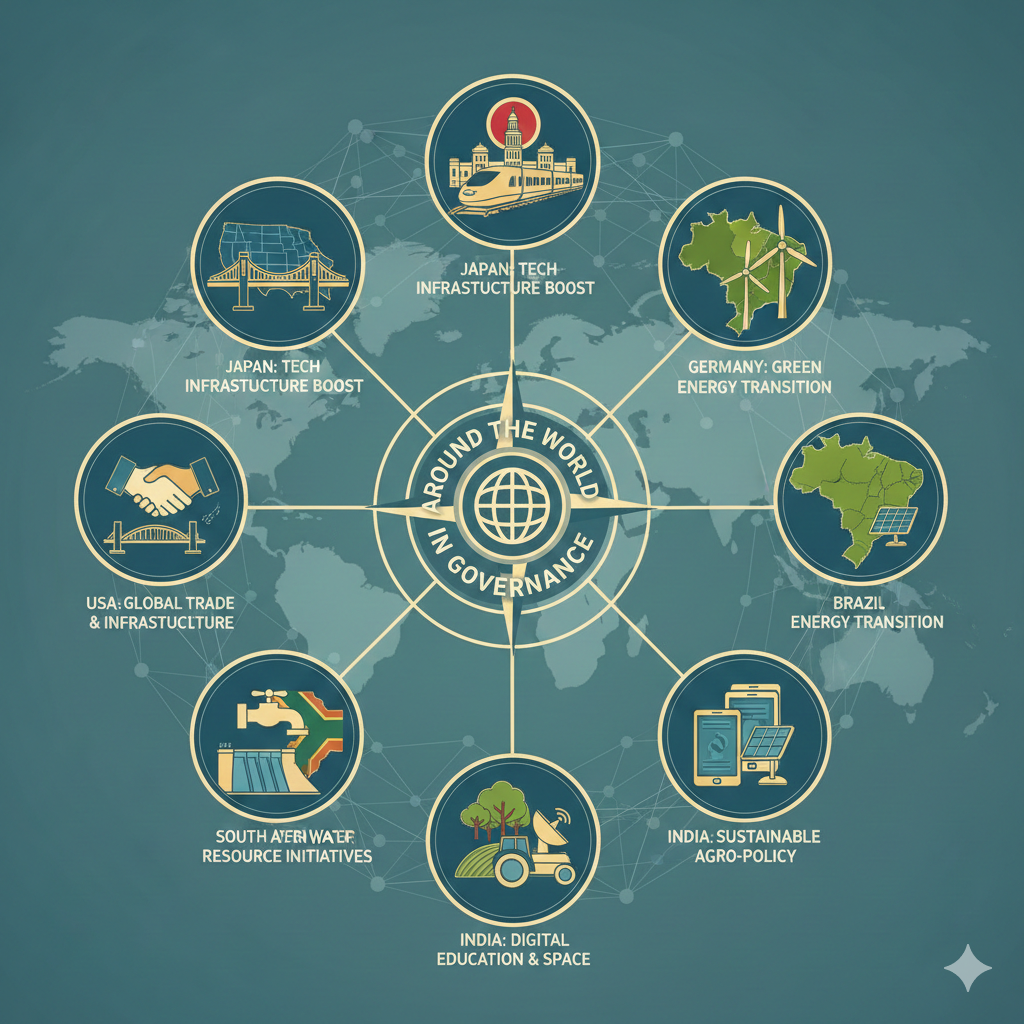
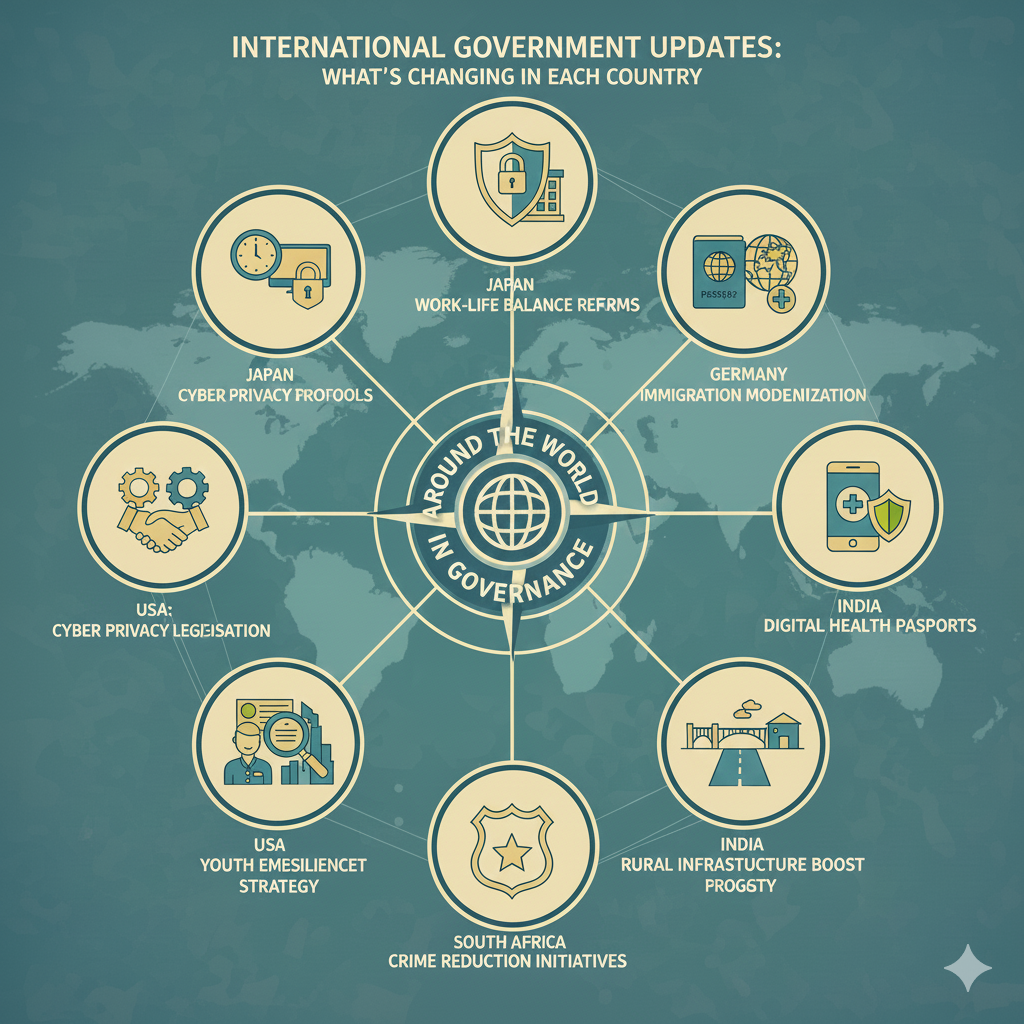
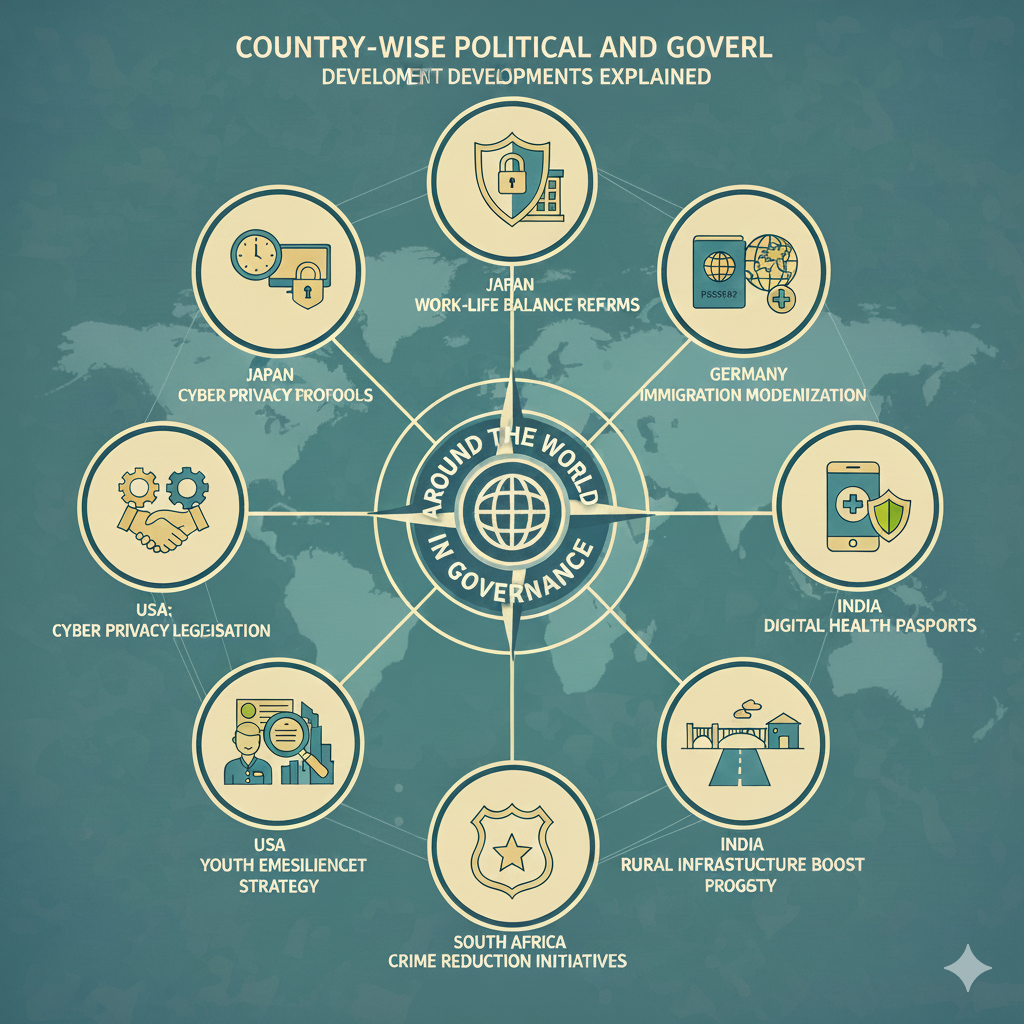
In response to economic pressures, societal demands, technical advancements, and geopolitical problems, governments worldwide are constantly enacting policies, reforms, and leadership changes. Gaining knowledge about worldwide government updates helps one understand how various nations are tackling domestic concerns while adjusting to global developments. These updates demonstrate the dynamic character of contemporary governance, ranging from legislative reforms and digital governance efforts to changes in economic and environmental policies.
North America: Modifications to the Economy and Policy
Governments in North America are concentrating on expanding social welfare, advancing technology, and stabilizing the economy. Controlling inflation, promoting growth, and bolstering important industries are the goals of fiscal policy and budgetary changes. Long-term strategic priorities are reflected in investments in sophisticated manufacturing, green energy, and infrastructure.
Healthcare, education, and social protection program improvements are examples of social policy updates. To increase accessibility and administrative effectiveness, governments are also growing their digital public services. North American nations continue to form multilateral alliances in their foreign policy, with a focus on commerce, security, and climate cooperation.
Europe: Changes in Regulation, Sustainability, and Governance
Institutional reforms, technology governance, and sustainability are becoming top priorities for European governments. National strategies revolve around emissions reduction goals, investments in renewable energy, and climate-related laws. Long-term economic and environmental resilience are the goals of these programs.
Transparency, anti-corruption initiatives, and citizen-centric digital governance are the main focuses of governance reforms. Through the European Union, which coordinates trade, security, migration, and innovation policies, Europe also keeps bolstering regional cooperation.
Asia-Pacific: Strategic Reforms and Economic Development
To preserve their competitiveness and regional relevance, Asia-Pacific nations are enacting economic and governance changes. There are many policies that support innovation ecosystems, digital infrastructure, and industrial growth. In order to assist a labor market that is changing quickly, governments are also concentrating on workforce development and educational changes.
Regional security concerns and economic alliances are reflected in the region’s strategic foreign policy decisions. International relations and regional stability are shaped by defense policies, trade talks, and multilateral engagement.
South Asia: Social Reforms, Governance, and Development
Governments in South Asia are concentrating on social welfare expansion, governance reform, and development-oriented policies. The goals of financial inclusion programs, infrastructure development, and digital governance initiatives are to increase accessibility and efficiency.
Updates to social policies prioritize poverty alleviation, healthcare, and education. The goals of political and governance changes are to promote regional collaboration, improve transparency, and fortify democratic institutions. Together, these programs promote socioeconomic expansion and sustainable development.
Middle East: Modernization of Governance and Economic Diversification
Governments in the Middle East are working to modernize governance structures and diversify their economies. Key goals include lowering dependency on oil income, promoting the expansion of the private sector, and growing the tourist and technology industries.
Initiatives to improve the efficiency of the public sector are reflected in labor reforms, administrative modernization, and digital governance. Domestic policy priorities and decision-making are also influenced by foreign partnerships, security strategies, and regional diplomacy.
Latin America: Environmental Reform, Economic Policy, and Social Equity
Government updates in Latin America emphasize social justice, environmental sustainability, and economic stabilization. The goals of tax updates, public expenditure changes, and fiscal policies are to control economic difficulties and foster growth.
Social welfare initiatives deal with healthcare, education, and inequality. Policy decisions are increasingly being influenced by environmental changes, especially those pertaining to climate resilience and natural resource management. Transparency, anti-corruption initiatives, and institutional effectiveness are prioritized in governance changes.
Technology Policies and Digital Governance
Adoption of digital governance and technology policies is a global trend in government upgrades. Countries are enacting laws pertaining to digital platforms, cybersecurity, artificial intelligence, and data protection. These programs seek to advance technical innovation, secure digital infrastructure, and improve administrative effectiveness.
Public service delivery, economic growth, and citizen involvement are all aided by digital transformation. Governments are striking a balance between innovation and the demands of security, privacy, and moral technology use.
Updates on Climate and Environmental Policy
Globally, government policy is heavily influenced by climate change. Nations are implementing programs for sustainable resource management, emissions reduction goals, and renewable energy. Public welfare, energy policy, and economic planning are all impacted by environmental policies.
Additionally, governments are funding sustainable agriculture, disaster preparedness, and climate adaption plans. National policy frameworks are nevertheless influenced by international cooperation on climate projects.
In conclusion
The dynamic character of political, economic, and social governance across nations is highlighted by international government updates. Countries are pursuing long-term goals while adjusting to new problems, from legislative reforms and leadership changes to digital governance and climate policy. Gaining knowledge of these updates can help one understand national priorities, global policy trends, and the tactics used by governments to address both internal and international issues. In order to navigate an interconnected globe, governments, businesses, and individuals must stay up to date on changes in international governance.