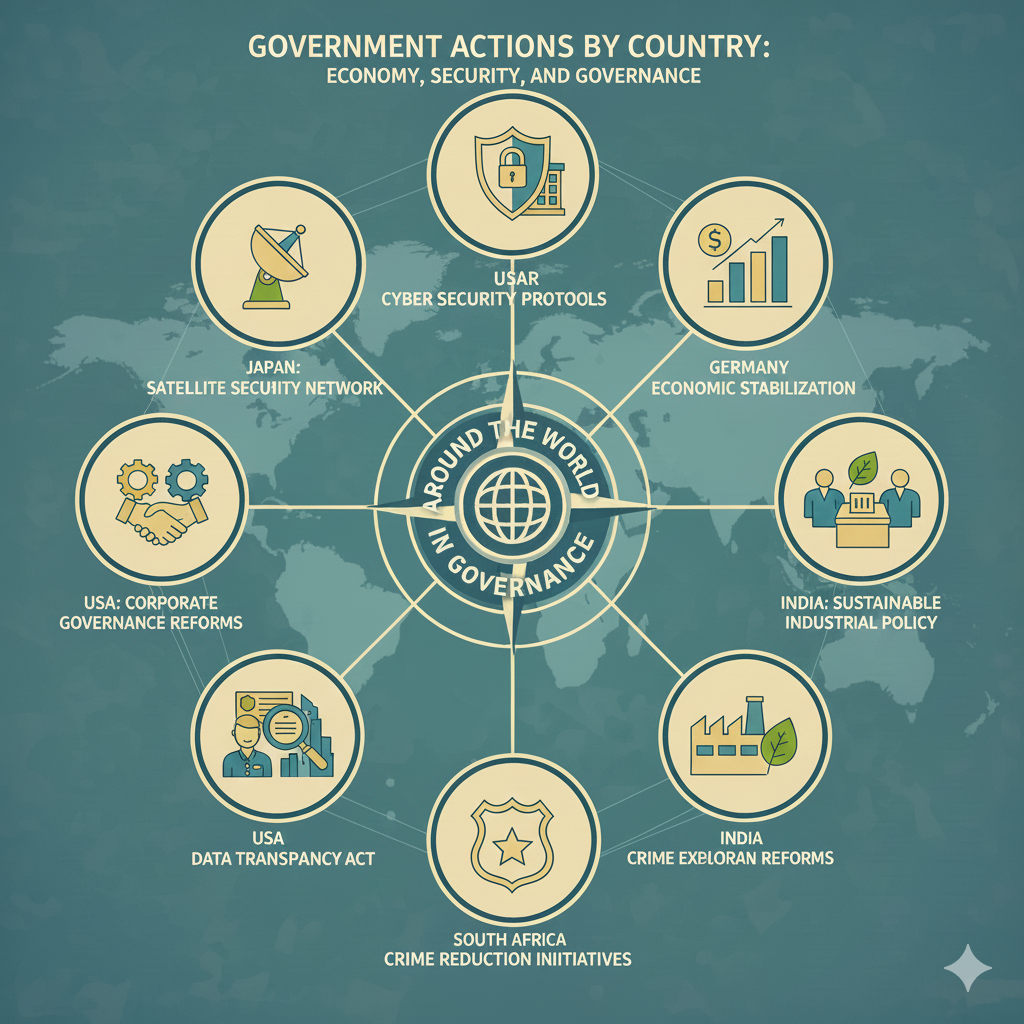
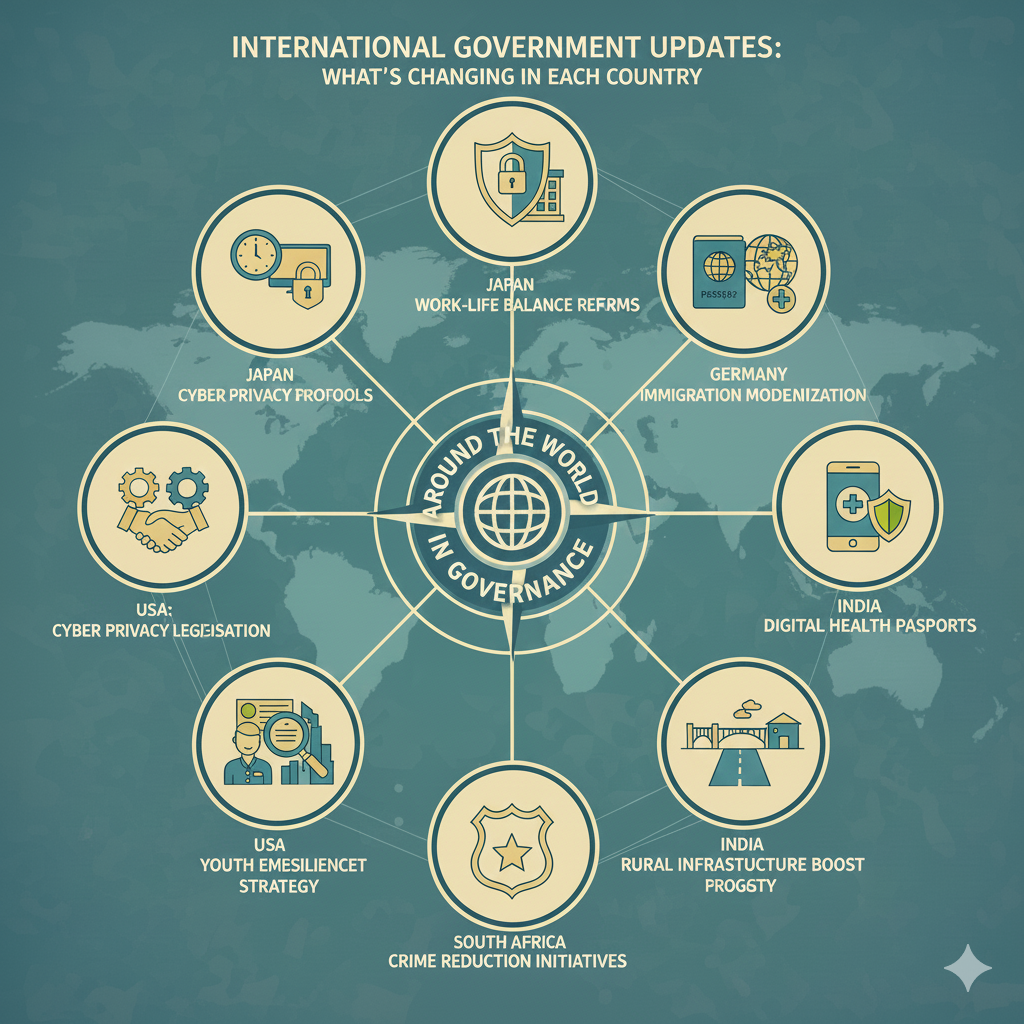
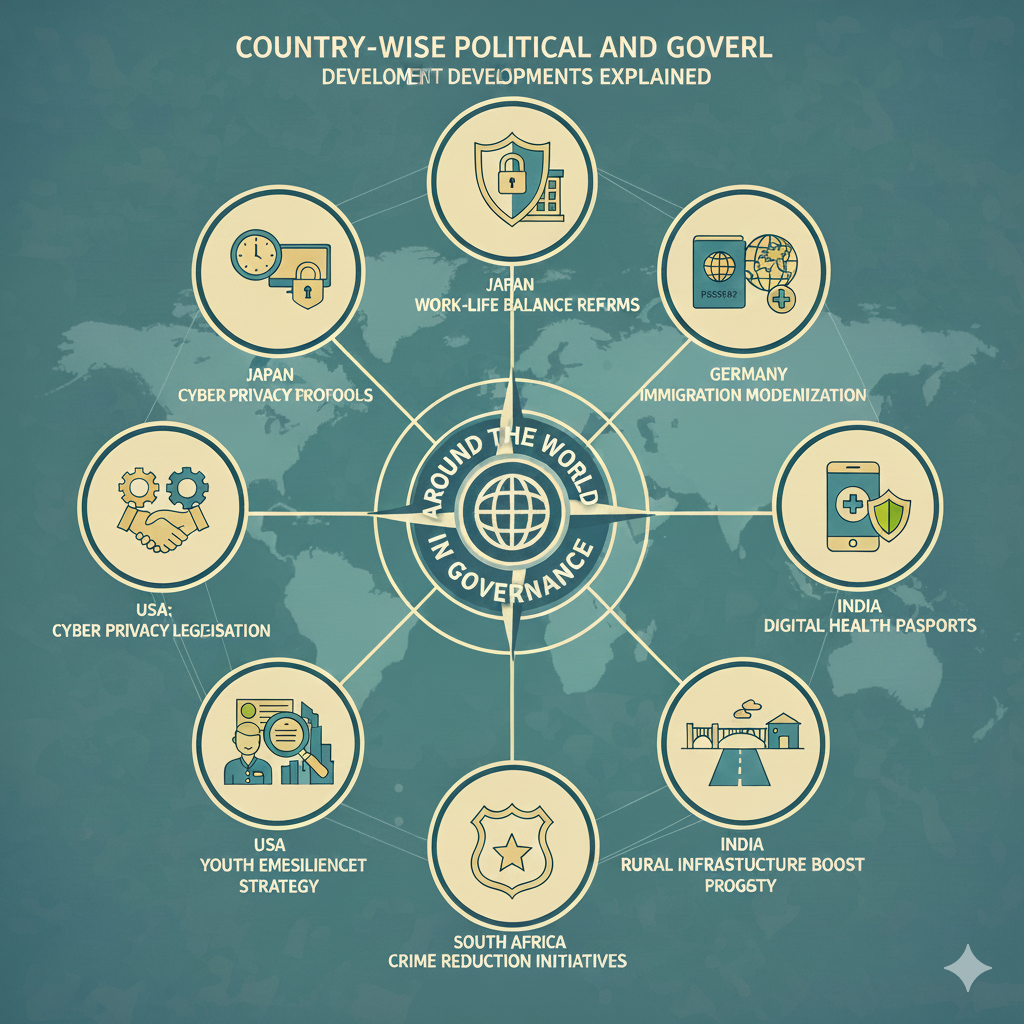
Globally, governments are acting decisively to improve governance systems, manage economic instability, and respond to changing security concerns. These initiatives are a reflection of national goals formed by both internal demands and external factors including climatic issues, technological advancements, and geopolitical developments. Analyzing national government initiatives in the fields of governance, security, and the economy offers important insights into how countries are negotiating a complicated and linked world.
Economic Measures: Boosting Growth and Stability
Globally, governments continue to place a high premium on economic management. In order to prevent inflation, promote growth, and maintain financial stability, several nations are enacting monetary and fiscal policies. Public investment plans, tax adjustments, and budget reforms are all intended to strike a balance between budgetary restraint and development objectives.
In order to promote domestic industry and innovation, governments are increasingly concentrating on industrial strategy. The goals of infrastructure improvements, startup incentives, and assistance for small and medium-sized businesses are to boost competitiveness and create jobs. In order to preserve international economic engagement while safeguarding national interests, trade policies are being adjusted.
Security Measures: Handling Conventional and New Dangers
Government security initiatives go beyond conventional military defense. Governments are increasingly tackling non-traditional threats like cyber dangers, terrorism, and health catastrophes, even if bolstering military capabilities and updating armed forces are still crucial.
These days, cybersecurity frameworks, intelligence collaboration, and border control changes are all integrated into national security strategies. To increase resilience, governments are making investments in emergency response systems, digital security, and monitoring. In order to combat cross-border threats, international security cooperation and strategic partnerships are essential.
Security Procedures: Addressing Traditional and Novel Risks
Initiatives for government security go beyond traditional military defense. Even if strengthening military capabilities and modernizing armed forces are still vital, governments are increasingly addressing non-traditional threats like cyber risks, terrorism, and health disasters.
These days, national security initiatives incorporate cybersecurity frameworks, intelligence cooperation, and modifications to border control. Governments are investing in surveillance, digital security, and emergency response systems to boost resilience. International security cooperation and strategic alliances are critical in the fight against cross-border threats.
North America: Leading the Way in Security and Economic Innovation
North American governments prioritize social policy growth, economic innovation, and security leadership. Long-term economic growth is supported by investments in infrastructure, clean energy, and technology. Additionally, governments are bolstering data protection and digital market regulatory frameworks.
International cooperation, cybersecurity, and defense modernization are the main focuses of security initiatives. Through institutional openness and digital public services, governance changes seek to increase efficiency and inclusivity.
Europe: Coordinated Governance, Security, and Sustainability
Coordinated governance, sustainability, and regional security are top priorities for European countries. Fiscal cooperation, industrial support, and investments in renewable energy are examples of economic actions. Economic planning and industrial strategy heavily rely on climate policies.
Security measures concentrate on cyber resilience, border security, and defense cooperation. The focus of governance reforms is on citizen protection, digital governance, and regulatory harmonization among member states.
Asia-Pacific: Development, Security Equilibrium, and Modernization of Governance
Asia-Pacific nations are taking steps to modernize governance, control security dynamics, and maintain economic growth. Economic growth is supported by funding for research, industrial strategy, and infrastructure development.
Governments strengthen their defense capacities and engage in diplomatic relations in order to resolve regional tensions and strategic rivalry. Digital services, regulatory reform, and public sector efficiency measures are all part of governance modernization.
South Asia: Governance and Security Reform Focused on Development
Governments in South Asia are concentrating on internal security, governance reform, and development-driven economic initiatives. Economic development is supported by financial reforms, digital inclusion, and infrastructure investment.
Counterterrorism measures, border control, and regional cooperation are examples of security measures. The goals of governance reforms are to increase institutional capacity, transparency, and service delivery.
Middle East: Strategic Security and Economic Diversification
To lessen reliance on conventional energy sectors, Middle Eastern nations are working to diversify their economies. Important economic activities include investments in private enterprise, tourism, and technology.
The main goals of security measures are defense modernization, diplomatic engagement, and regional stability. Labor market updates, digital governance, and public sector reorganization are examples of governance reforms.
Africa: Strengthening Governance, Growth, and Stability
Governments throughout Africa are acting to improve security, foster growth, and bolster governance. Initiatives for industrialization, agricultural reform, and infrastructural development are examples of economic acts.
Terrorism, border security, and internal disputes are all addressed by security measures. Efforts to strengthen governance concentrate on democratic procedures, anti-corruption initiatives, and institutional reform.
Latin America: Social Security, Institutional Reform, and Economic Stability
Governments in Latin America are concentrating on social protection, governance reform, and economic stabilization. The goals of labor reforms, social welfare initiatives, and fiscal policies are to combat inequality and advance economic development.
Security measures focus on regional collaboration, public safety, and organized crime. Transparency, judicial independence, and administrative effectiveness are key components of governance changes.
In conclusion
Government initiatives by nation show how countries are tackling difficult issues by working together in the areas of governance, security, and the economy. Public safety, competent governance, and economic resilience are similar objectives, however strategies differ according to national environment. Gaining an understanding of these acts can help one better understand national plans and global policy trends that will influence international relations and development in the future.