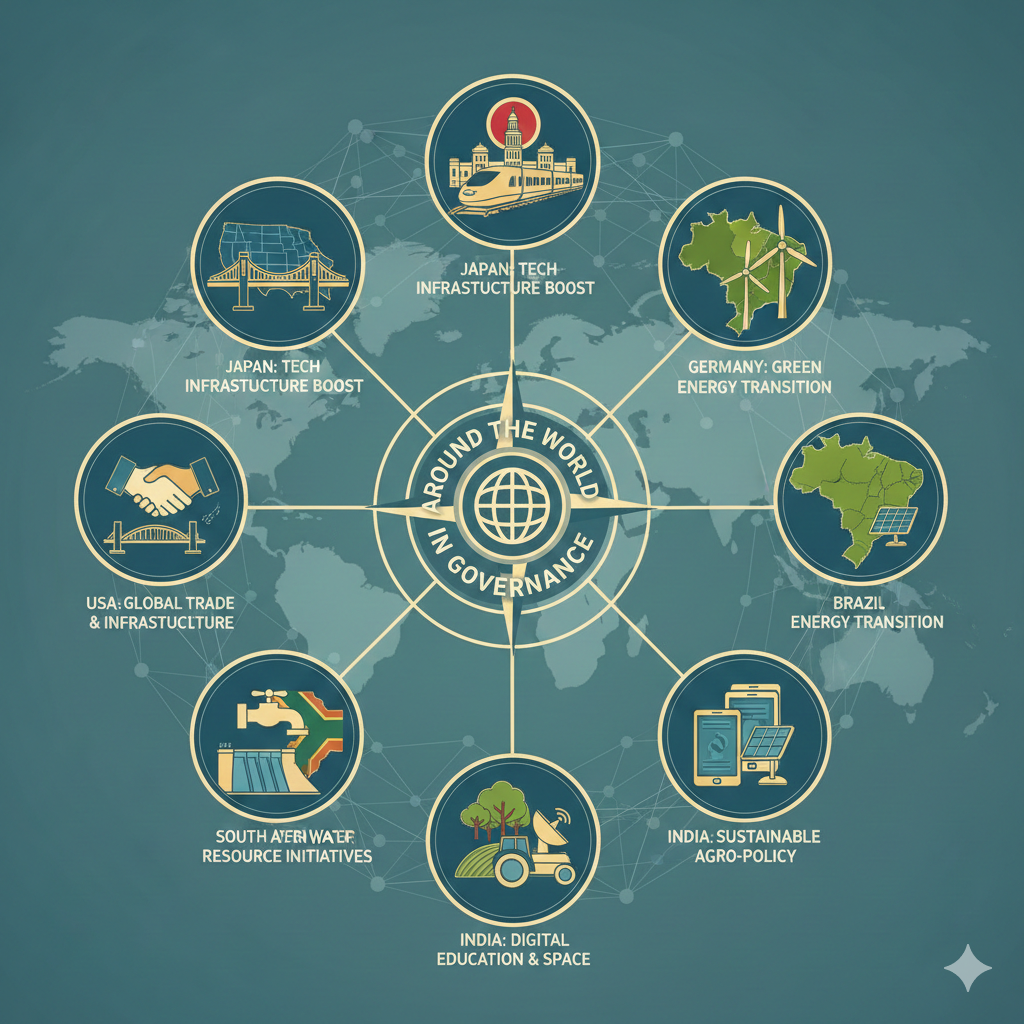
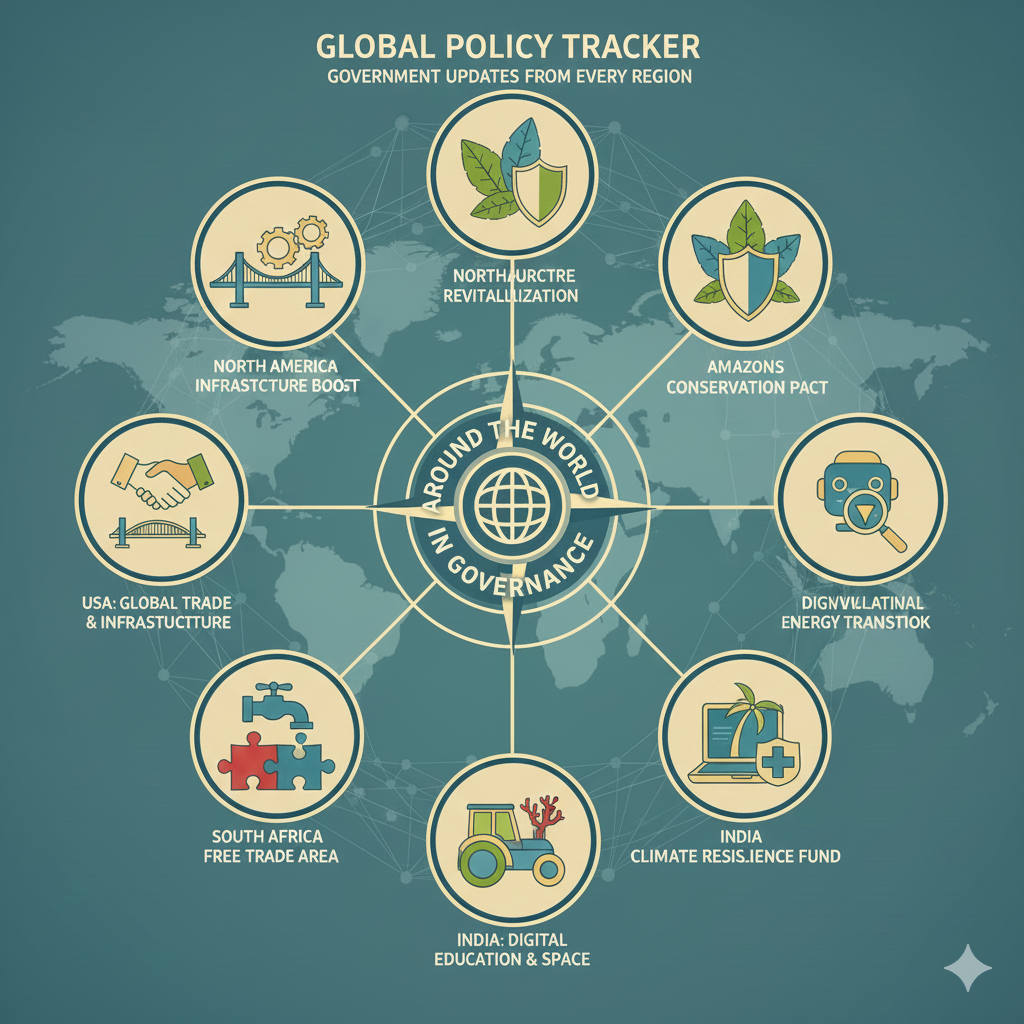
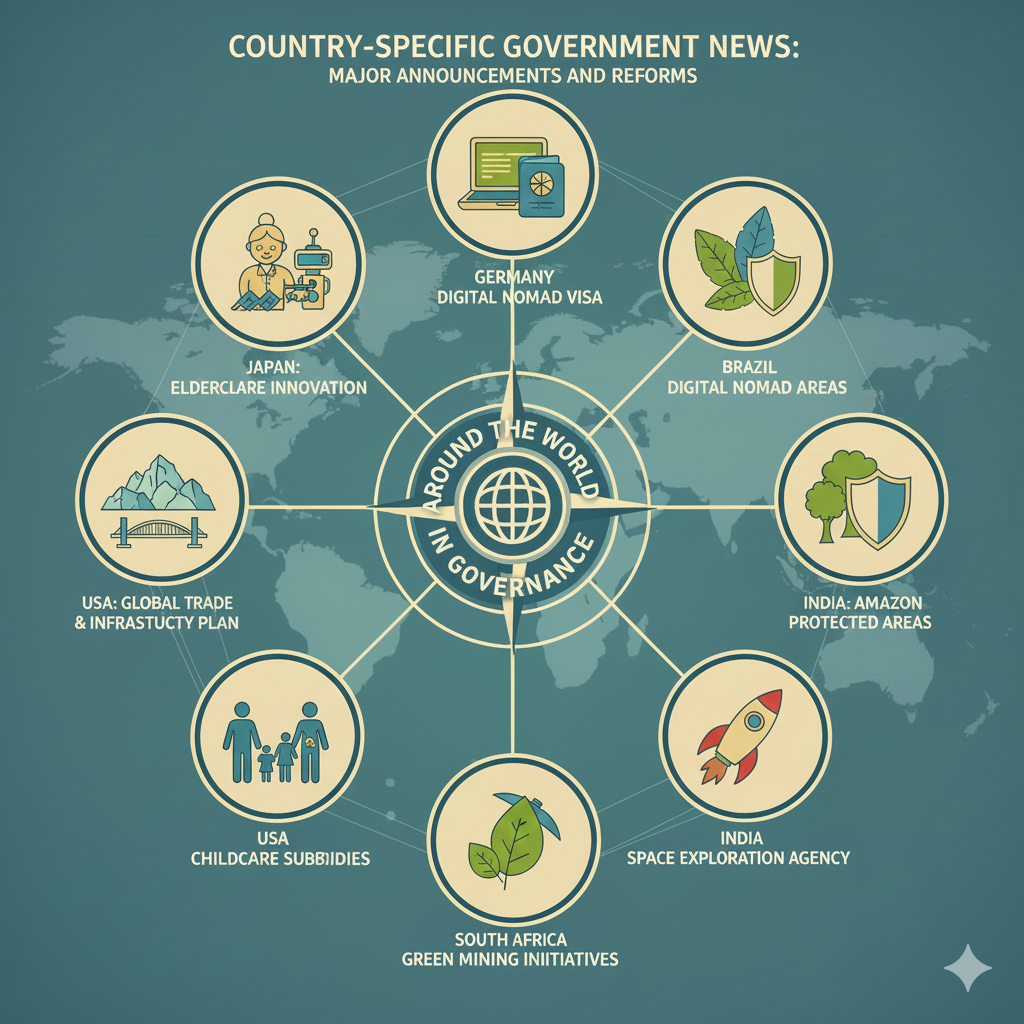
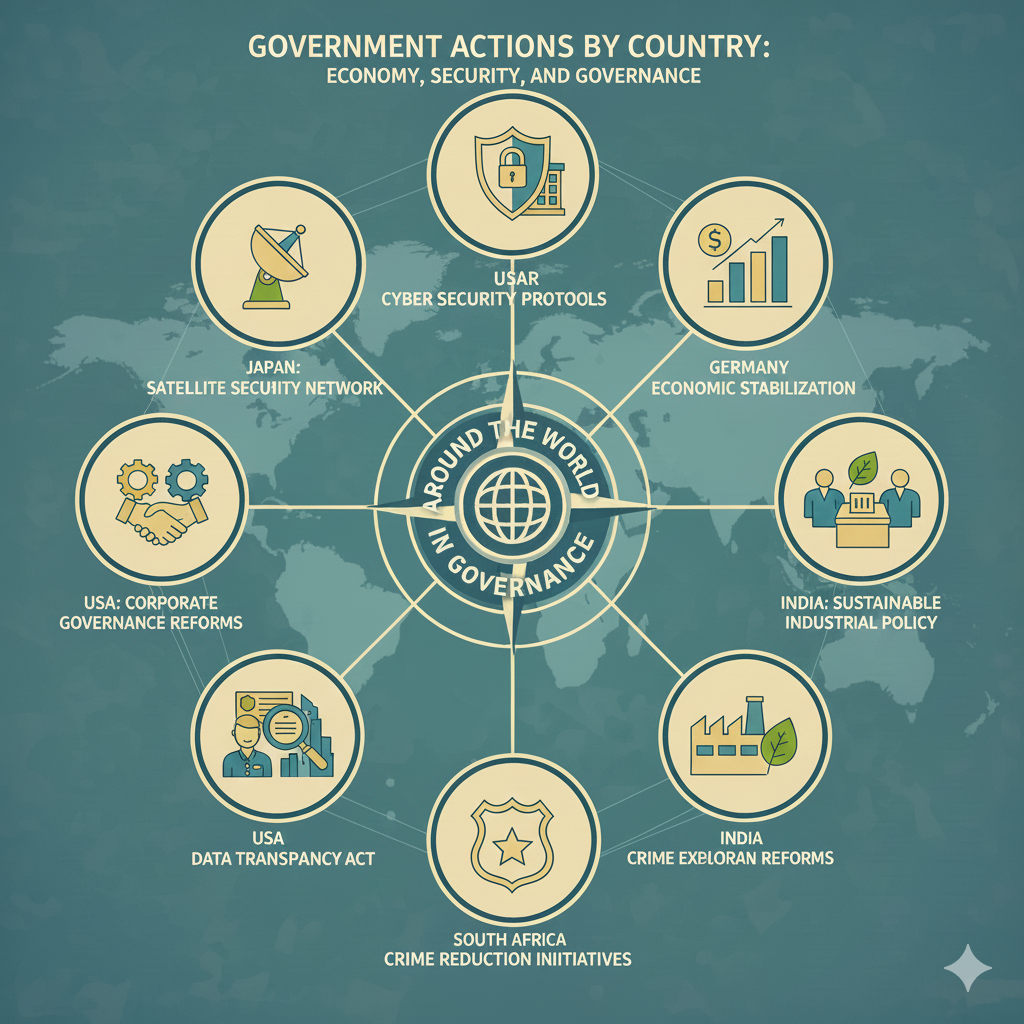
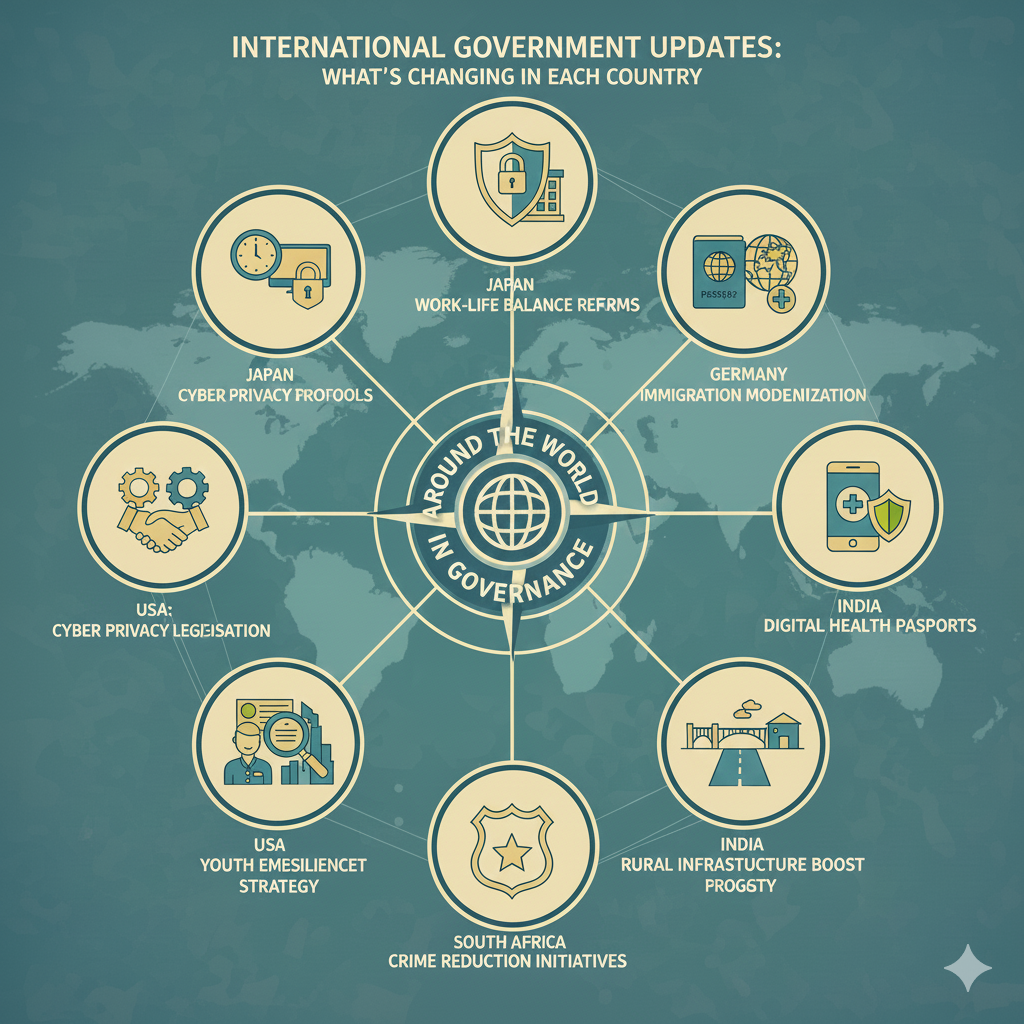
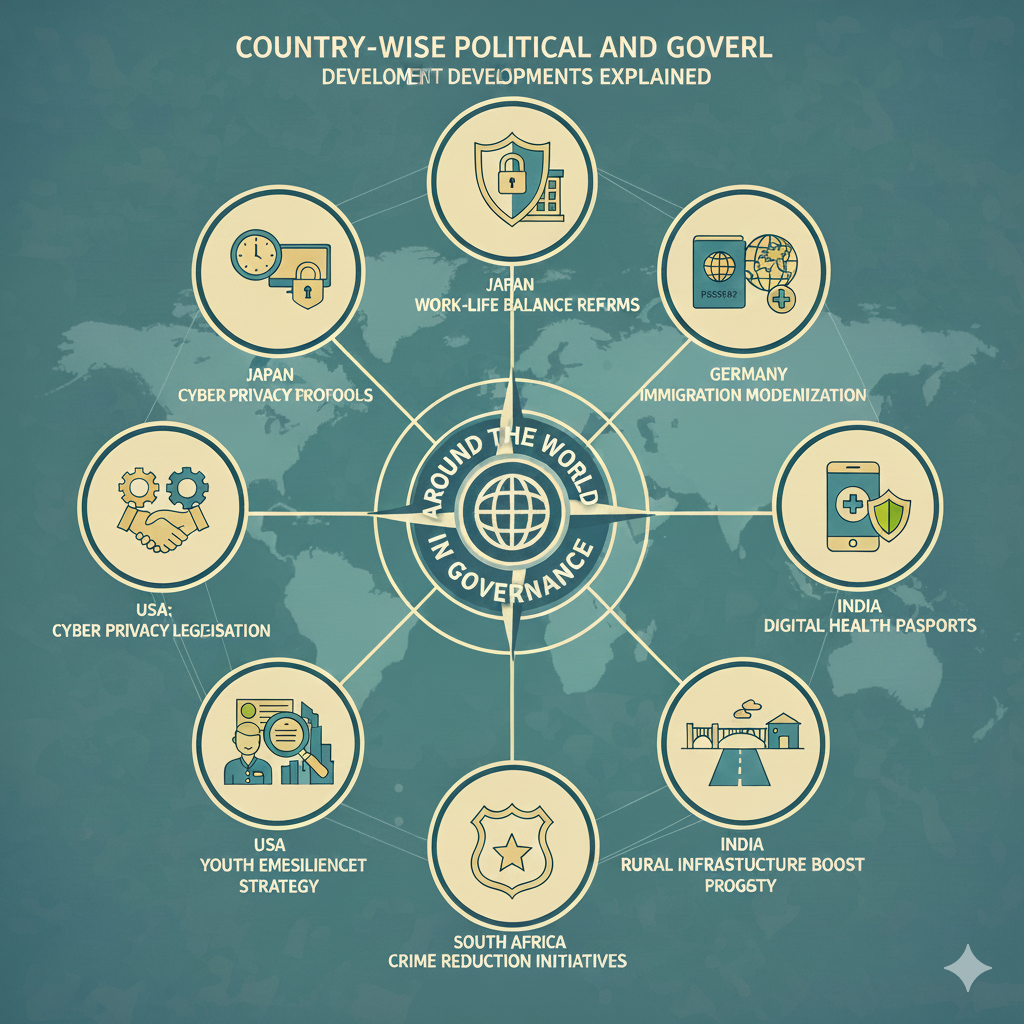
Globally, governance systems are always changing as governments react to demands from the environment, societal change, economic uncertainties, security issues, and technology advancements. Governmental decisions made at the national level offer important insights into how countries handle public affairs, create policies, and carry out changes to fulfill both domestic and international obligations. These choices affect national development routes and global stability, ranging from institutional change and economic planning to security plans and climate action.
North America: Reforming Governance and Economic Strategy
Government actions in North Americagies are being shaped by climate policy, investments in renewable energy, and emissions reduction goals. Commitments to energy security and sustainable development are reflected in these choices.
Regulatory governance is still important, especially when it comes to consumer rights, data security, and digital marketplaces. Additionally, European governments coordinate trade, immigration, and security policies, underscoring the need of collective governance in tackling common issues.tructure development.
The focus of governance reforms is on digital public services, openness, and current regulations. International cooperation, cybersecurity frameworks, and defense modernization are examples of security decisions. These steps show a thorough approach to national security, public administration, and economic stability.
Asia-Pacific: Development, Safety, and Modernization of Administration
Governments in the Asia-Pacific region are acting decisively to manage security dynamics, promote economic growth, and update administrative frameworks. Economic growth is fueled by infrastructure investment, industrial policy, and encouragement for innovation.
Governments increase defensive capabilities while interacting diplomatically in order to resolve regional conflicts and strategic competitiveness. Digital administration, regulatory reform, and enhanced public service delivery are all components of governance modernization.
South Asia: Development-Oriented Governance Choices
Government decisions in South Asia prioritize social welfare, economic development, and governance reform. Inclusive growth is supported by policies that encourage financial access, infrastructure development, and digital inclusion.
Long-term development objectives are reflected in social policy decisions that deal with employment, healthcare, and education. In order to solve common issues, governments also concentrate on bolstering institutions, increasing transparency, and participating in regional cooperation.
Middle East: Transformation of Governance, Security, and Diversification
Middle Eastern nations are taking calculated steps to modernize governance and diversify their economies. Key economic concerns include investing in technology and tourism, growing private enterprise, and reducing dependency on conventional energy sectors.
Defense modernization, diplomatic engagement, and regional stability are the main concerns of security decisions. Initiatives for governance transformation include advances in public sector efficiency, digital government platforms, and labor market reforms.
Africa: Policy for Development and Institutional Strengthening
Government decisions throughout Africa are centered on regional integration, institutional strengthening, and economic development. The goal of investments in industrialization, agriculture, and infrastructure is to increase employment and productivity.
Transparency, anti-corruption initiatives, and democratic procedures are prioritized in governance decisions. While regional cooperation promotes shared development and security objectives, security policies deal with domestic stability and cross-border threats.
Latin America: Social Governance and Economic Management
Governments in Latin America are making choices to control economic instability, advance social justice, and fortify institutions. The goals of labor laws, social welfare initiatives, and fiscal changes are to stabilize economies and lessen inequality.
Judicial reform, administrative modernization, and transparency initiatives are examples of governance decisions. Policies addressing climate change and sustainable resource management are contributing to the growing significance of environmental governance.
Innovation in Policy and Digital Governance
Adoption of digital governance is a recurring subject in national government decisions. To increase effectiveness and accessibility, governments are putting digital identification platforms, e-governance systems, and data-driven policymaking tools into place.
Decisions about technology policy also deal with data security, artificial intelligence regulation, and cybersecurity. These steps strike a balance between security, privacy, and ethical concerns and innovation.
Climate and Environmental Governance Decisions
National decision-making is becoming more and more influenced by climate governance. Governments all throughout the world are implementing frameworks for sustainability, emissions control, and renewable energy. Development planning incorporates methods for resilience and climate adaptation.
Given the need for coordinated global solutions to climatic concerns, international collaboration on environmental governance is still crucial.
Strategic Governance and Foreign Policy
Foreign policy and international involvement are decisions made by national governments. Governments are participating in multilateral institutions, fortifying alliances, and adjusting diplomatic tactics.
Global governance frameworks and domestic policy priorities are shaped by trade agreements, security alliances, and development cooperation. The interconnectedness of contemporary governance is reflected in strategic foreign policy decision-making.
In conclusion
Country-by-country governance choices around the world show a common endeavor to negotiate difficult economic, social, and geopolitical issues. Governments are unified by shared objectives of public security, sustainable development, economic stability, and efficient governance, notwithstanding the differences in country settings. Gaining an understanding of these national government choices can help one better understand global governance patterns and the future course of international relations in a globalized society.