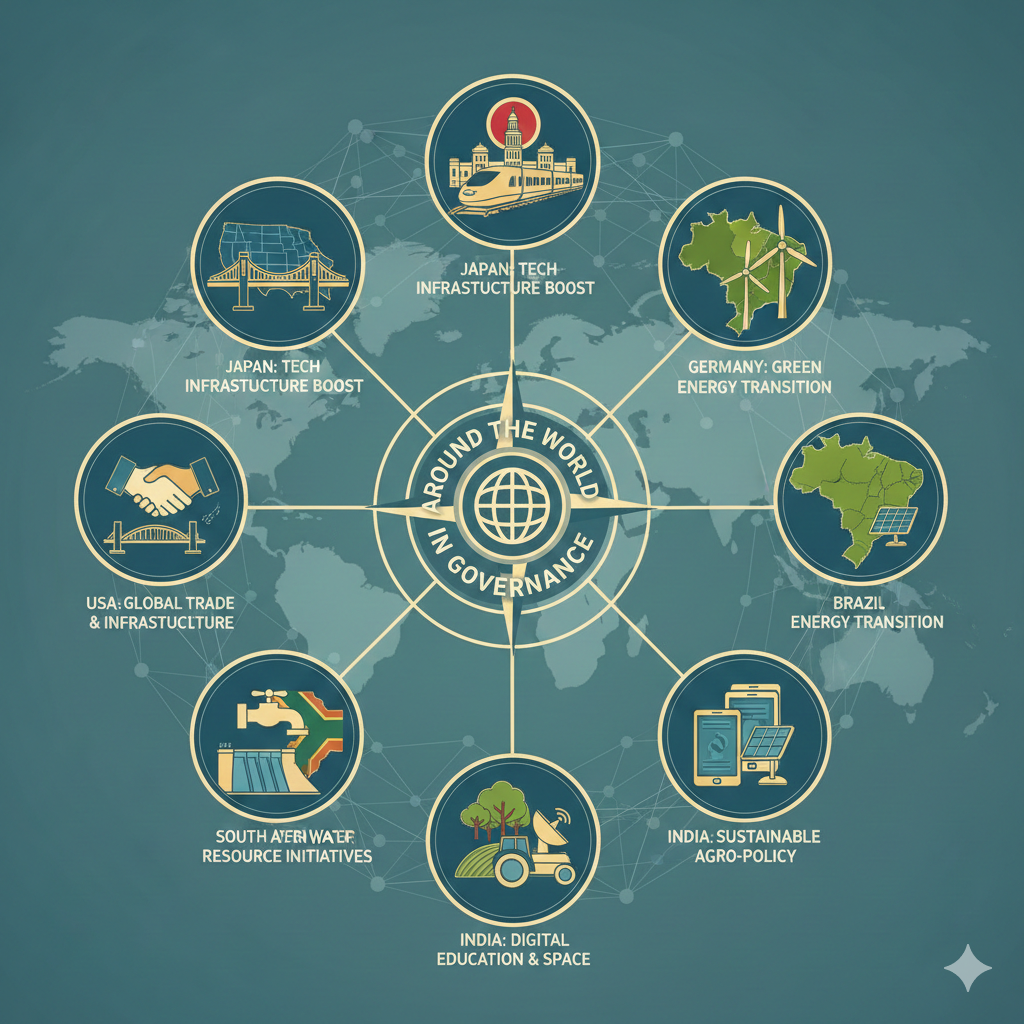
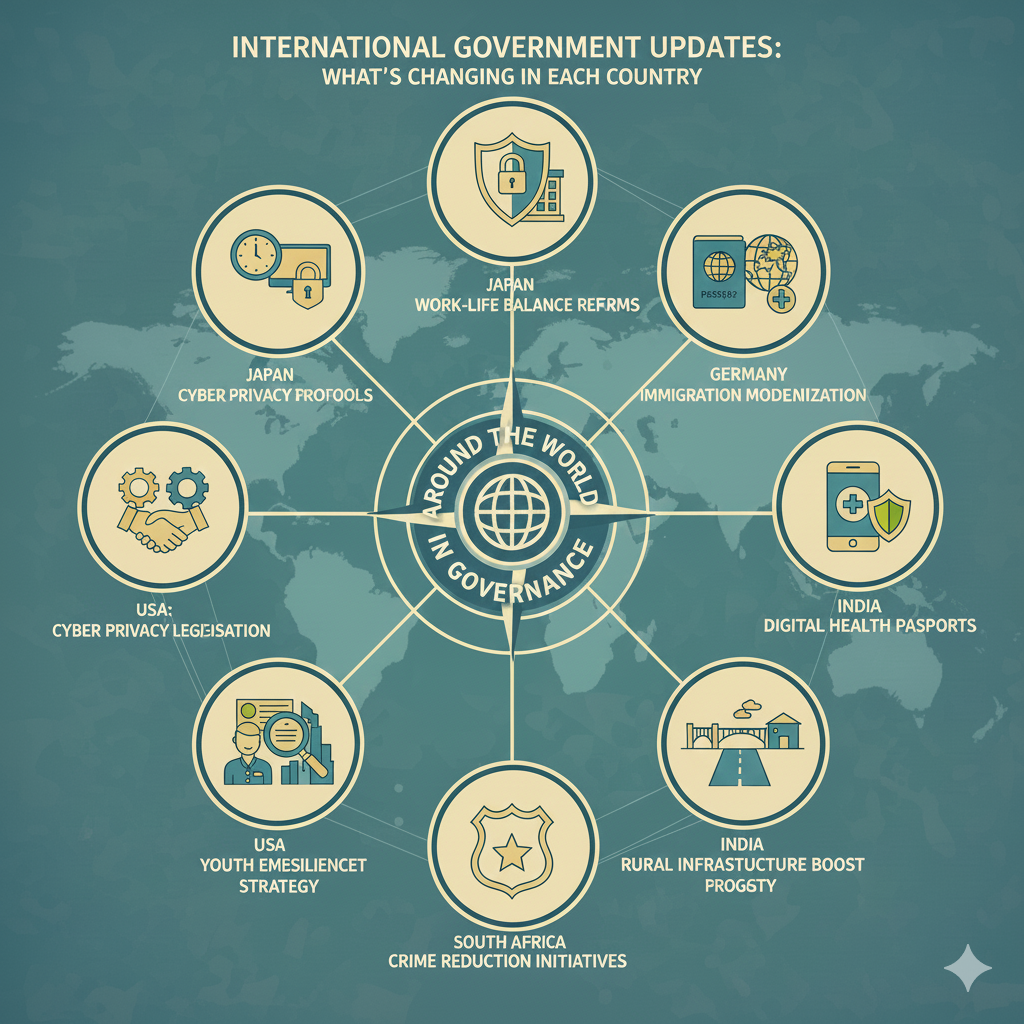
Globally, governments are constantly revising their policies to address public expectations, technological advancements, security issues, economic pressures, and climatic threats. Global events have sped up policy transformation in recent years, thus country-by-country government updates are crucial to comprehending how countries are adjusting to a world that is changing quickly. Important policy developments are influencing national agendas and worldwide trends, from social welfare programs and economic reforms to changes in foreign policy and digital governance.
North America: Strategic Priorities and Policy Changes
Economic stability, national security, and technical leadership are the main topics of government policy updates in North America. Economic policies prioritize supply chain resilience, domestic manufacturing, and inflation control. To support long-term growth, governments are investing in digital transformation, clean energy, and infrastructure renovation.
Foreign policy and national security continue to be major issues. Policy decisions are still influenced by foreign alliances, border control, and defense tactics. At the same time, social policies pertaining to labor rights, healthcare, and education show attempts to strike a balance between social welfare and economic competitiveness.
Europe: Regional Cooperation, Sustainability, and Governance
In order to address environmental sustainability, energy security, and economic recovery, European governments are constantly revising their policies. Emissions reduction goals, investments in renewable energy, and climate-focused legislation are top priorities. The goal of these programs is to strike a balance between environmental responsibility and economic prosperity.
Digital legislation and governance improvements are also important. While maintaining consumer and privacy protections, European nations are bolstering data protection legislation, regulating digital platforms, and encouraging innovation. With integrated trade, security, and migration policies influencing government throughout the continent, regional cooperation continues to be a defining characteristic.
Asia-Pacific: Strategic Balance and Economic Development
Rapid political and economic change is still occurring in the Asia-Pacific area. In this area, government updates frequently center on industrial policy, economic growth, and technical innovation. Key policy issues include innovation-driven growth, manufacturing incentives, and infrastructure expansion.
Diplomacy and security are also important. To control regional stability and strategic competition, governments are modifying their defense and foreign policy. Efforts to assist expanding populations and changing labor markets are reflected in social policies pertaining to education, employment, and digital inclusion.
South Asia: Social Reform, Governance, and Development
Policy improvements in South Asia prioritize social inclusion, governance reform, and economic development. To spur growth, governments are concentrating on financial inclusion, digital public services, and infrastructure investment. Administrative effectiveness and service delivery are being enhanced by technology-enabled governance.
Social welfare programs that focus on poverty alleviation, healthcare, and education continue to be crucial. National policies are also influenced by regional cooperation and foreign policy, especially in the areas of commerce, security, and climate adaption.
Middle East: Modernization of Policy and Economic Diversification
Governments in the Middle East are changing their policies in an effort to modernize and diversify their economies. Priorities include lowering reliance on conventional energy sources, encouraging private investment, and growing the tourist and technology sectors.
Initiatives for digital transformation, labor market regulations, and governance changes are examples of larger attempts to modernize institutions and economies. Government decisions are still shaped by regional diplomacy and security strategies, which have an impact on both foreign relations and domestic stability.
Africa: Regional Integration, Growth, and Governance
Governments around Africa are revising their policies to support regional integration, enhance governance, and encourage economic growth. The three main areas of policy focus are industrialization, agrarian reform, and infrastructure development. To encourage entrepreneurship, governments are also placing a strong emphasis on innovation and internet connectivity.
Long-term development depends on social policies that cover jobs, healthcare, and education. Initiatives for regional cooperation promote trade integration as well as group responses to security and environment issues.
Latin America: Social Policy and Economic Stability
Updates from Latin American governments frequently center on institutional reform, social protection, and economic stability. Economic agendas are centered on measures to control employment, public debt, and inflation. In order to combat inequality and enhance access to public services, governments are also growing their social programs.
Sustainable development and environmental policy are becoming more and more important, especially in relation to climate resilience and natural resource management. Transparency in governance and political changes continue to be top goals throughout the region.
Updates on Climate and Environmental Policy
Significant policy changes are being driven by climate change in several regions. Governments are enacting environmental laws, investing in renewable energy, and creating climate action plans. International cooperation, adaption plans, and climate finance are increasingly essential components of national policy frameworks.
Energy pricing, employment, and industrial strategy are all impacted by the growing intersections between environmental policy and economic and social objectives.
Updates on Climate and Environmental Policy
Significant policy changes are being driven by climate change in several regions. Governments are enacting environmental laws, investing in renewable energy, and creating climate action plans. International cooperation, adaption plans, and climate finance are increasingly essential components of national policy frameworks.
Energy pricing, employment, and industrial strategy are all impacted by the growing intersections between environmental policy and economic and social objectives.
In conclusion
Government updates by country show how countries are pursuing their own national goals while responding to common global challenges. Global attempts to improve governance, bolster economies, increase security, and tackle long-term issues like climate change and technological disruption are reflected in significant policy changes. Gaining knowledge of these updates can help one better understand global trends as well as the course of international politics and development. Businesses, analysts, and people alike must stay up to date on national government policies in a world that is changing quickly.