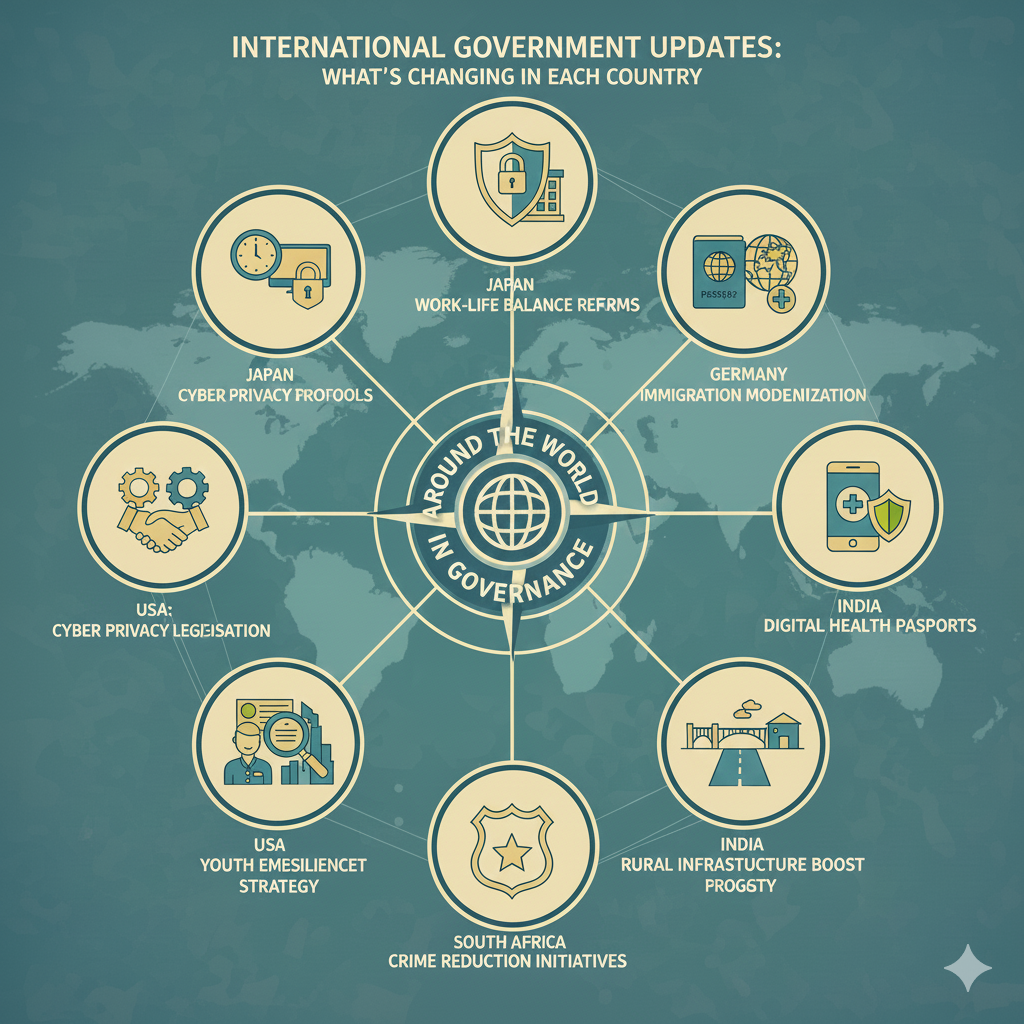
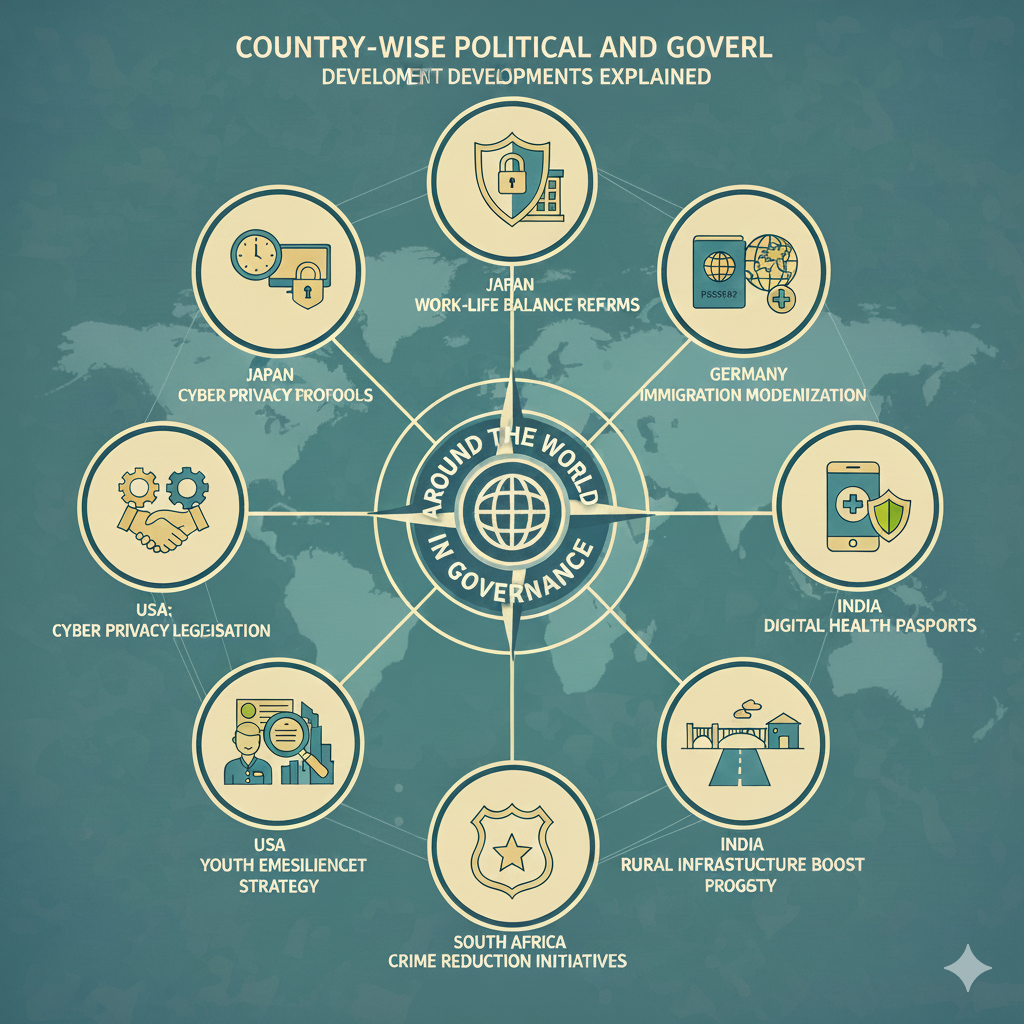
Governments everywhere are continuously revising policies to deal with economic uncertainties, security issues, social upheaval, and environmental hazards in a time of fast change and growing interconnectedness. Readers can learn how national actions together influence global trends by using a global policy tracker that tracks government changes from every region. Regional policy updates show the changing objectives of governments around the world, from economic reforms and modernization of governance to security plans and climate action.
North America: Institutional Reform and Economic Strategy
Government policy revisions in North America emphasize institutional reform, innovation, and economic resiliency. To control inflation, promote growth, and assist vital industries, fiscal and monetary policies are being modified. To increase long-term competitiveness, governments are making investments in sophisticated manufacturing, sustainable energy, and infrastructure.
The focus of governance reforms is on digital service delivery, transparency, and modernization of regulations. International collaboration, cybersecurity, and defense modernization are all covered by security policies. Efforts to strike a balance between domestic interests and global leadership obligations are reflected in these revisions.
Europe: Regional Coordination, Regulation, and Sustainability
When it comes to updating policies based on sustainability, European governments are still at the forefront. National and regional policies are centered on climate legislation, the promotion of renewable energy, and emissions reduction targets. While preserving economic stability, these policies seek to accomplish environmental objectives.
Reforms in governance and digital legislation are also significant. Within a strong legal framework, governments are bolstering data privacy, controlling digital platforms, and encouraging innovation. With coordinated trade, immigration, and security policies bolstering political and economic integration, regional coordination continues to be a distinguishing characteristic.
East Asia: Technological Progress and Industrial Policy
The governments of East Asia are putting strategies into place to preserve their technical competitiveness and industrial leadership. The region’s emphasis on innovation-led growth is demonstrated by investments in R&D, semiconductor manufacturing, and digital infrastructure.
The necessity to control regional tensions and strategic rivalry is reflected in security and foreign policy developments. To maintain stability and economic continuity, governments are pursuing diplomatic engagement while bolstering their defense capabilities.
South Asia: Governance and Reform with an Emphasis on Development
Policy improvements in South Asia prioritize social inclusion, governance reform, and economic development. To promote inclusive growth, governments are funding financial inclusion programs, digital public services, and infrastructure.
Social policies deal with the creation of jobs, healthcare, and education. Development strategies and security priorities are greatly influenced by regional collaboration and foreign policy involvement.
Growth, Integration, and Policy Balance in Southeast Asia
Southeast Asian nations are striking a balance between sustainability, governance, and fast economic growth. Economic planning revolves around policies that support manufacturing, trade, and tourism.
In order to control urbanization and technological advancement, governments are also modernizing digital governance frameworks and environmental restrictions. Stability and mutual growth are supported by regional cooperation through security and economic alliances.
Middle East: Modern Governance, Security, and Diversification
Governments in the Middle East are working to reform their policies with an emphasis on modernization and economic diversification. Key goals include lowering reliance on conventional energy sectors, growing the tourist and technology sectors, and promoting private investment.
Security strategies prioritize defense modernization, diplomatic involvement, and regional stability. Public sector reorganization, labor market updates, and digital government projects are examples of governance reforms.
Africa: Regional Integration, Development, and Governance
Government updates around Africa emphasize expanding regional integration, enhancing governance, and quickening development. Important policy issues include industrialization, agricultural reform, and infrastructure development.
The goals of social policy are to enhance employment, healthcare, and education. Frameworks for security cooperation and regional trade agreements promote stability and economic progress throughout the continent.
Latin America: Social Policy Reform and Economic Stability
Governments in Latin America are revising their policies to control economic instability and advance social justice. The goals of social welfare programs, public spending changes, and fiscal reforms are to stabilize economies and lessen inequality.
Government priorities are increasingly being shaped by environmental and climate policy, especially in nations with abundant natural resources. Transparency, accountability, and institutional strength are key components of governance improvements.
Trends in Technology Policy and Digital Governance
The growth of digital governance is a significant regional trend. Policies pertaining to cybersecurity, artificial intelligence, data protection, and digital identification systems are being introduced by governments. These programs boost security, increase productivity, and promote digital economies.
National security and competitiveness are becoming more closely associated with technology policy. To promote responsible and equitable digital development, governments are striking a balance between innovation and regulation.
In conclusion
A global policy tracker provides a thorough overview of regional government updates, demonstrating how national choices jointly influence worldwide trends. Government policies reflect changing objectives in a globalized society, ranging from economic reforms and modernization of governance to security plans and climate action. Policymakers, corporations, and people can better comprehend global dynamics and predict future advancements in international governance by keeping up with these updates.